Atomic Minerals acquires South Lisbon property
None
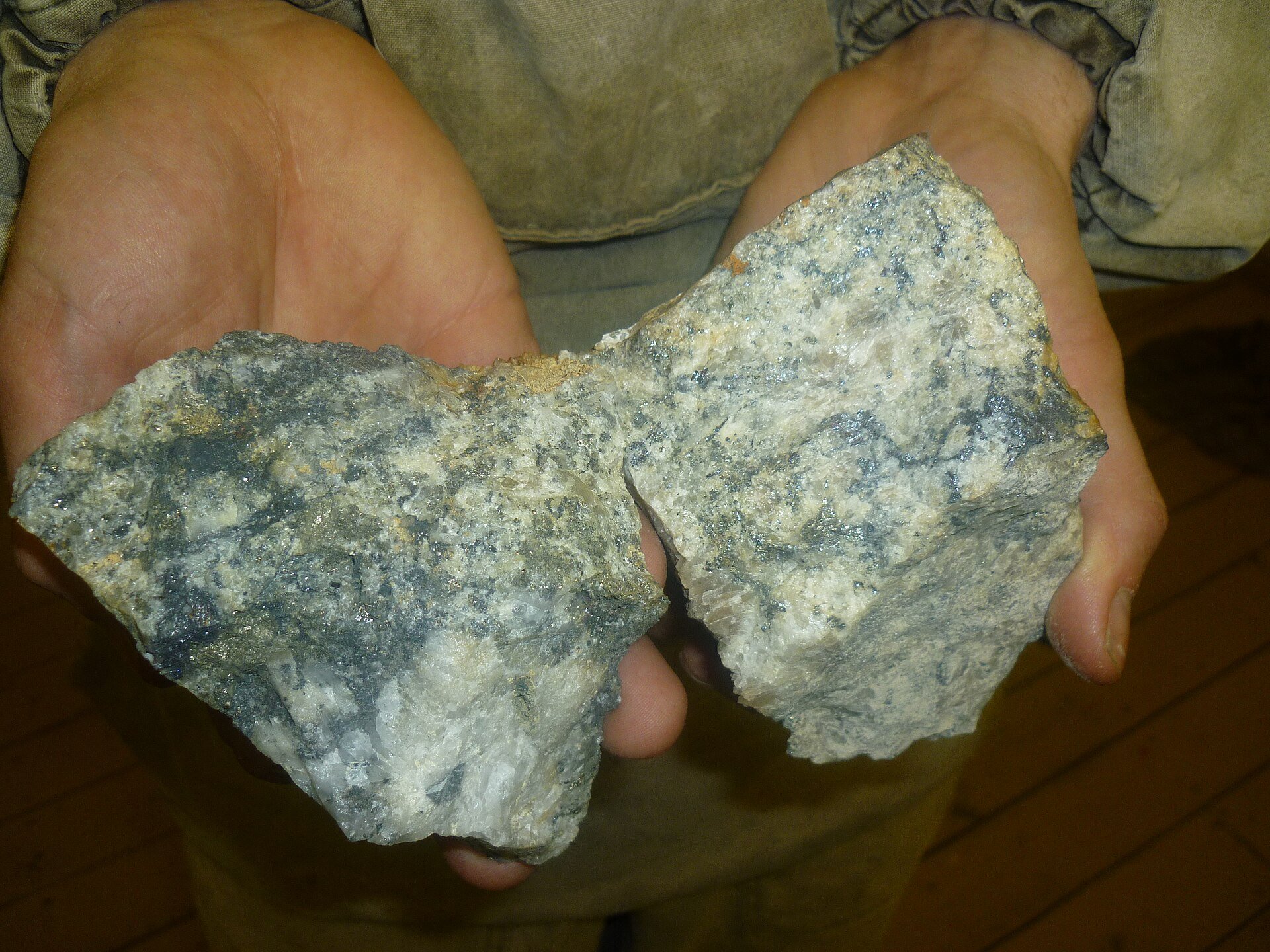
The most recent news, released on October 14, 2025, states that Atomic Minerals Corp. (ATOM) has acquired the South Lisbon Valley East property (SLVE) in San Juan County, Utah, through a Quit Claim Deed. The property covers 1,516.5 acres (614 hectares) and is located approximately 35 kilometres northeast of Monticello.
Geologically, the SLVE property is situated in the Colorado Plateau, targeting penecordant uranium mineralization within the Moss Back member of the Triassic Chinle formation. It is associated with the northeastern side of the downfaulted Lisbon Valley anticline. Historical evidence from oil and gas drill holes within the property (nine wells) revealed "off-scale" radioactivity over widths of 1.8 to 4.5 metres (six to 15 feet) at depths of 760 to 880 metres (2,495 to 2,890 feet). These anomalies are believed to outline a similar belt of uranium mineralization to that found on the southwest side of the Lisbon Valley anticline, a region that historically produced approximately 80 million pounds of U3O8 between 1952 and 1982. The CEO, Clive Massey, expressed pleasure in acquiring the property, citing strong evidence for the speculated eastern arcuate belt of uranium mineralization.
This acquisition is a positive development for Atomic Minerals, aligning with its strategy to expand its uranium exploration portfolio in the Colorado Plateau, a historically significant uranium-producing region. Acquiring the property via a Quit Claim Deed suggests a low up-front cash cost, which is crucial given the company's precarious financial position. The historical gamma ray anomalies from oil and gas wells provide encouraging initial data, supporting the potential for significant uranium mineralization and validating the company's geological interpretation of a larger mineralized belt.
However, the material impact is tempered by several factors: 1. Financial Health: As of May 31, 2025 (prior to the last share rollback and recent financings/debt settlements), the company had only $135,030 in cash and a working capital deficiency of over $1 million. The recent $1.5 million private placement announced on September 5, 2025, only closed for $125,000 on October 9, 2025, indicating very weak market demand for its equity. This limited funding raises serious questions about the company's ability to finance the deep (760-880m) and expensive drilling required to prove up this new acquisition, especially given the history of using shares for debt. 2. Execution Risk: The company has a track record of operational delays, such as the pause in drilling at Harts Point (August 2023) due to BLM requests and the pushing out of exploration at Bleasdell Lake (November 2024 update pushed to March 2025). While drill permits for Harts Point were reapplied for in August 2024, the timeline for actual drilling and results remains uncertain. This new property also requires permitting and a substantial exploration budget for deep drilling. 3. Dilution History: Atomic Minerals has frequently resorted to share issuances for debt settlement and private placements, often at discounts to market prices, leading to significant dilution for existing shareholders. This new acquisition, while by Quit Claim Deed, will eventually require substantial capital expenditure. 4. Nature of Discovery: This is an acquisition of prospective ground based on historical data, not a new discovery or a confirmed resource compliant with NI 43-101. Significant work is still needed to validate the historical "off-scale" readings into a formal resource.
In context of all historical news, this acquisition reinforces the company's strategic focus on the Colorado Plateau and adds to its potential long-term asset base. However, the consistent struggles with financing and operational execution, highlighted by the low uptake of recent private placements and continuous debt-for-shares swaps, mean that this positive geological news does not materially improve the company's immediate financial or operational outlook to justify a significant positive re-rating. It simply adds another project to a portfolio that requires substantial capital the company currently lacks.
Atomic Minerals Corp. (ATOM) is a junior mineral exploration company primarily focused on uranium projects in North America. The company aims to identify exploration opportunities in regions with geological potential similar to areas with previous uranium discoveries.
ATOM's project portfolio spans two key uranium-producing regions: 1. Colorado Plateau, United States: This region has a long history of uranium mining, with over 597 million pounds of U3O8 produced historically. Key projects here include: * Harts Point (Utah): This is a joint venture with Kraken Energy Corp., where Kraken can earn up to a 75% interest. Permits for up to 20-25 drill holes are in place. Initial Phase 1 drilling encountered elevated radioactivity, and further drill permitting is in progress. Atomic retains a 2% Net Smelter Royalty (NSR) on this property, with a buy-down option to 1% for $5 million USD. * Dolores Anticline (Colorado): A wholly-owned property located near the Uravan mineral belt. The company is actively reviewing historical oil and gas drill hole databases and laying out drill hole locations for permitting for summer drilling, based on anomalous gamma ray spikes in the basal Chinle formation. * 10 Mile Anticline (Utah): Another wholly-owned property, also undergoing review of historical drill data for permitting, with similar geological potential to Dolores. * South Lisbon Valley East (SLVE, Utah): The most recent acquisition, obtained via Quit Claim Deed. This property shows historical "off-scale" radioactivity in oil and gas wells within the Moss Back member of the Chinle formation, suggesting potential for an arcuate belt of uranium mineralization similar to the highly productive Lisbon Valley anticline. 2. Northern Saskatchewan, Canada: This region is renowned globally for high-grade uranium deposits (Athabasca Basin). After initially discontinuing some older Saskatchewan projects, Atomic acquired a new package of properties in February-April 2024. Key among these are: * Bleasdell Lake: Hosts a historic (non-NI 43-101 compliant) estimate of 620,700 pounds of U3O8. The company has identified three additional uranium targets and has applied for a multi-year exploration permit for ground-based geophysics and up to 4,000 meters of diamond drilling. * Pistol Lake: Located very close to Cameco's Sand Lake deposit and surrounded by Cameco claims, showing promising coincidental magnetic and gravity low anomalies. * Archie Lake: Contiguous to NexGen Energy's land package, with two target zones identified from historical airborne gravity gradiometry. * Mozzie Lake: A recent acquisition (October 2025) of 5 claims (20,743.5 hectares) with a historic resource estimate (non-compliant) of 491,588 lbs U3O8. The property has a 2% gross overriding royalty.
The company's primary strategy revolves around leveraging historical data from oil and gas drilling and past uranium exploration to identify new targets and fast-track exploration.