ARIS MINING ANNOUNCES POSITIVE PEA RESULTS FOR THE TOROPARU GOLD PROJECT
None
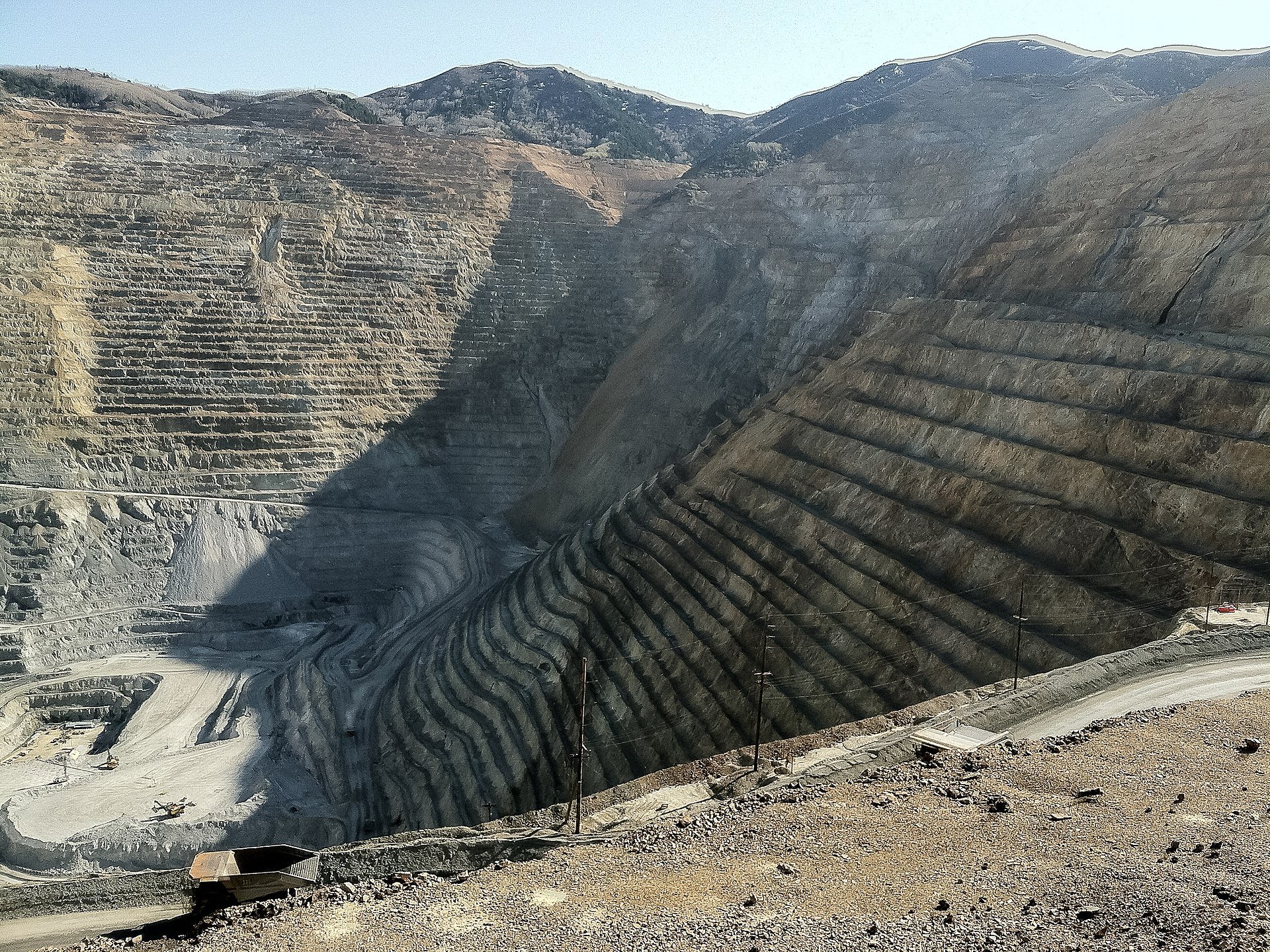
On October 28, 2025, Aris Mining announced positive results from a Preliminary Economic Assessment (PEA) for its 100%-owned Toroparu Gold Project in Guyana. The PEA outlines a 21.3-year mine life with average annual gold production of 235,000 ounces.
The study's base case uses a gold price of $3,000/oz and projects a robust after-tax Net Present Value (NPV) at a 5% discount rate of $1.8 billion, an Internal Rate of Return (IRR) of 25.2%, and a 3.0-year payback period. The initial capital cost is estimated at $820 million, with life-of-mine All-In Sustaining Costs (AISC) projected at $1,289 per ounce. The company is targeting the completion of a Pre-Feasibility Study (PFS) in 2026.
The release of a PEA for the Toroparu project was expected, as the company had guided for its completion in Q3/Q4 2025. While the headline economic figures (NPV of $1.8B, IRR of 25.2%) appear highly attractive and material for a company with a market cap of ~$2.4B, they are fundamentally undermined by an extremely aggressive base-case gold price assumption of $3,000/oz. This price is significantly above current market levels and standard long-term analyst forecasts, presenting the project in the best possible light and masking underlying risks. As a risk-averse analyst, this is a major red flag.
A pattern of using high metal price assumptions is evident. The September 3, 2025, PFS for the Soto Norte project used a base case of $2,600/oz gold. While these studies demonstrate the leverage of the projects to higher gold prices, they obscure the projects' viability at more conservative, long-term prices. The news release notably omits a sensitivity analysis, preventing an easy assessment of the project's economics at lower, more realistic gold prices.
The projected initial capital cost of $820 million is substantial. With a cash position of $415 million as of September 30, 2025, and significant ongoing capital expenditures for the Marmato expansion, funding Toroparu would require significant external financing. This will likely involve a combination of new debt and considerable equity issuance, posing a material dilution risk to current shareholders.
Positively, the company has demonstrated strong execution on its near-term growth projects. The Segovia mill expansion was completed on time and on budget (June 30, 2025 news), and Q3 production showed a 25% increase, demonstrating the ramp-up is progressing as planned. This operational competence lends some credibility to their ability to develop larger projects, but does not mitigate the financial and commodity price risks of the development pipeline.
In conclusion, the news is materially positive as it advances a key pipeline asset and demonstrates its significant potential scale and leverage to gold prices. However, the reliance on an unrealistic gold price assumption and the looming financing requirement for the large capex temper the enthusiasm. The market may react well to the headline NPV, but sophisticated investors will discount it heavily.
Aris Mining is a gold producer focused on Latin America. The company currently operates two mines in Colombia: the Segovia Operations and the Marmato Upper Mine. Its strategy is to grow production to over 500,000 ounces annually through a combination of brownfield expansions and development of its project pipeline.
The company's current flagship is the Segovia Operations in Colombia, a high-grade underground mining complex that serves as the primary cash flow generator. Key growth projects include the recently completed Segovia mill expansion, the construction of the large-scale Marmato Lower Mine (bulk mining zone), the 51%-owned Soto Norte project in Colombia (PFS complete), and the 100%-owned Toroparu gold/copper project in Guyana (PEA complete).