Anfield Energy Welcomes U.S. Designation of Uranium as Critical Mineral, Unlocking Funding and Accelerated Development for Domestic Projects
None
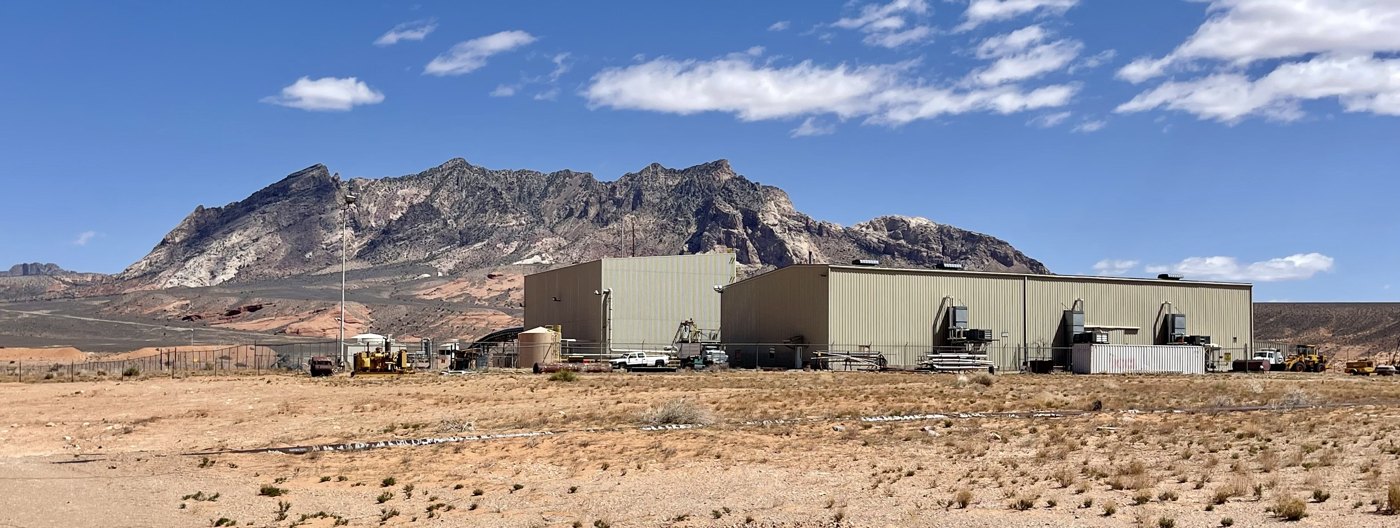
The most recent news, dated November 10, 2025, announces two key developments for Anfield Energy. First, the company welcomes the U.S. government's official designation of uranium as a "critical mineral." Management states this policy shift could lead to expedited permitting, targeted federal investments, and better market access for its domestic projects. Second, Anfield has held a groundbreaking ceremony at its Velvet-Wood Uranium-Vanadium Mine in Utah, officially launching construction activities. These activities include reopening the mine, dewatering, and development work. The company is targeting potential first production in 2026. The CEO, Corey Dias, framed these events as "transformative" and stated the policy change will "supercharge" their path to production.
This news is materially positive as it confirms the achievement of a key operational milestone and benefits from a significant political tailwind.
-
Operational Execution: The groundbreaking at Velvet-Wood is the culmination of a series of positive permitting and approval announcements throughout 2025. After receiving expedited review in May and final state approval in October, the start of construction demonstrates management's ability to execute on its stated timeline. This significantly de-risks the pre-production schedule and moves the company firmly into the development stage. The new production target of 2026 is an acceleration from the previously guided 2027 mill restart, indicating increased confidence.
-
Political Tailwind: The designation of uranium as a critical mineral is a major positive for the entire U.S. domestic uranium sector. While not exclusive to Anfield, it validates the company's strategic focus on U.S.-based assets. This designation may unlock access to non-dilutive government funding and grants under various federal programs, potentially reducing the need for future equity raises to fund the significant capital expenditures required for mine and mill restarts.
-
Critical Risk Factor: Despite the positive developments, a critical risk remains buried in the disclaimers of the press release: "Production decision not based on feasibility study of mineral reserves demonstrating economic and technical viability." Proceeding to construction based on a Preliminary Economic Assessment (PEA) is an aggressive and high-risk strategy. PEAs are preliminary in nature and include inferred resources that are considered too speculative for economic evaluation. By skipping a Pre-Feasibility (PFS) or Feasibility Study (FS), the company is accepting a much higher degree of uncertainty regarding metallurgy, mine planning, capital costs, and operating costs. This significantly increases the risk that the project may not be economically viable or could face unforeseen technical challenges, potentially leading to a complete loss of invested capital.
While the news confirms progress, the decision to build the mine without a feasibility study is a major red flag for any risk-averse investor. The positive execution on permitting is overshadowed by the introduction of substantial, unquantified operational and economic risk.
Anfield Energy Inc. is a U.S.-based uranium and vanadium development company aiming for near-term production. Its strategy is a "hub-and-spoke" model centered on its wholly-owned Shootaring Canyon Mill in Utah. The mill is one of only three licensed, permitted, and constructed conventional uranium mills in the United States, making it a key strategic asset. The company's flagship mining project, Velvet-Wood, is a past-producing uranium and vanadium mine also located in Utah, which it is now advancing back into production. Anfield also controls a large portfolio of other uranium/vanadium projects, primarily in Colorado, including Slick Rock and the Paradox Basin properties (JD-7), which are intended to provide future feed for the mill.