Newcore Gold Announces Updated Mineral Resource Estimate for the Enchi Gold Project, Ghana
Newcore doubles indicated resource as Enchi transitions from heap leach to high-recovery milling
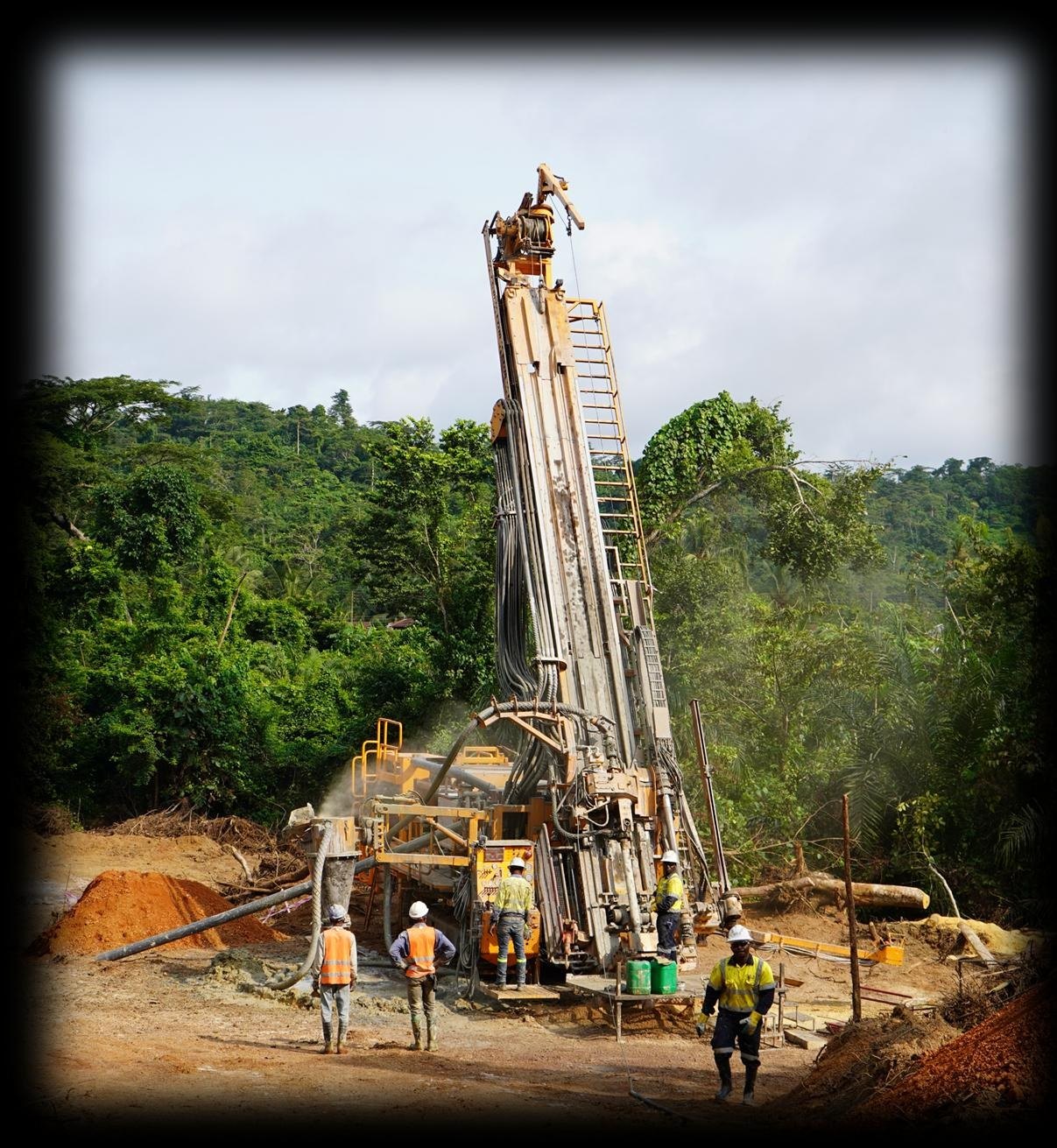
The most recent news (March 18, 2026) announces a significant Mineral Resource Estimate (MRE) update for the Enchi Gold Project. Key highlights include: - Indicated Mineral Resource more than doubled to 1,502,000 ounces of gold (83.6 million tonnes at 0.56 g/t Au). - Inferred Mineral Resource stands at 626,000 ounces of gold (40.1 million tonnes at 0.49 g/t Au). - The resource is pit-constrained across four deposits (Sewum, Boin, Nyam, Kwakyekrom), all of which remain open along strike and at depth. - This update incorporates results from a massive 60,000-meter drill program and serves as the foundation for the upcoming Pre-Feasibility Study (PFS).
The news is Material - Positive for several reasons: - De-risking through Conversion: Doubling the Indicated category significantly increases the geological confidence required for the upcoming PFS. This is a critical step for project financing and development. - Strategic Pivot: Previous studies (2024 PEA) focused on a low-grade heap leach model. Recent metallurgical tests (Feb 2025) and this MRE update support a shift to a standard milling/CIL flowsheet with much higher recoveries (89.4% to 97.7%), which captures more value in a high gold price environment. - Scale: Crossing the 1.5-million-ounce Indicated threshold establishes Enchi as a project of significant scale in the Sefwi-Bibiani belt, home to major mines like Ahafo and Chirano. - Funding: The company successfully leveraged warrant exercises to raise over C$14M in late 2025 and early 2026, ensuring the 60,000m drill program and PFS are fully funded without immediate dilutive equity raises.
Newcore Gold is focused on the 100%-owned Enchi Gold Project in Ghana. The project covers 216 km² along the Sefwi-Bibiani gold belt. Historically viewed as a near-surface, oxide-hosted heap leach project, recent exploration has identified high-grade "shoots" (e.g., 147.5 g/t Au over 1.0m) and visible gold at depth, prompting a shift toward a larger-scale milling operation.