Koryx Copper Announces Further Significant Drill Results at the Haib Copper Project, Southern Namibia
Koryx fast-tracks Haib Copper toward PFS as aggressive drilling yields high-grade intercepts and massive treasury secures development runway.
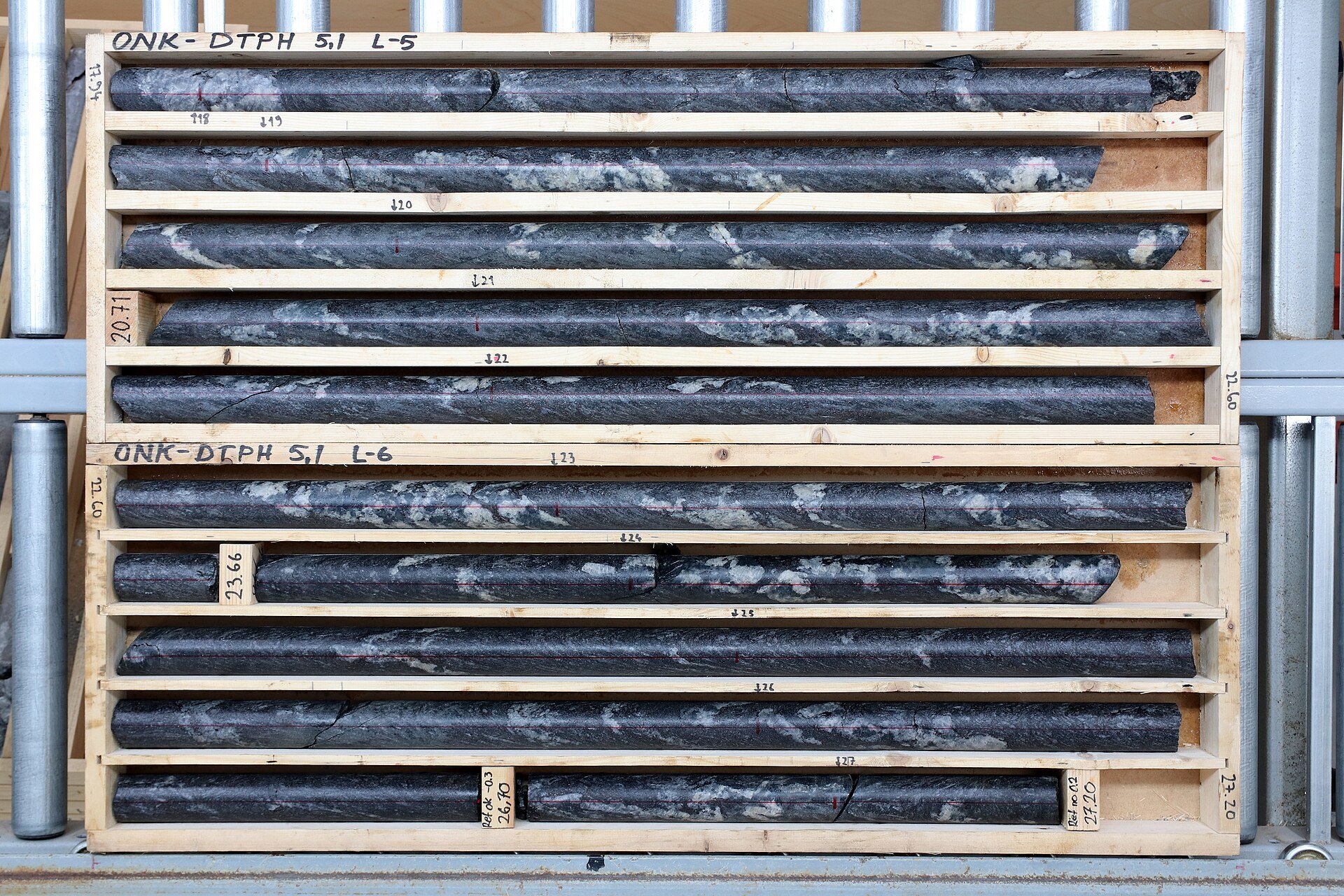
The most recent news (February 23, 2026) reports assay results from 13 drill holes (4,960m) at the flagship Haib Copper Project. Key intercepts include 602m @ 0.32% CuEq and 184m @ 0.51% CuEq (including 16m @ 1.09% CuEq). These results are part of a massive 55,000m program aimed at converting the entire Mineral Resource Estimate (MRE) to the Indicated category by mid-2026. Management notes that infill results are exceeding expectations in both width and grade. Concurrently, the company is advancing metallurgical testwork and infrastructure studies for a Preliminary Feasibility Study (PFS) slated for late 2026.
The impact is Material - Positive. - Resource De-risking: The results confirm the continuity of higher-grade domains within the larger porphyry system, which is critical for the "starter pit" strategy intended to improve early-year project economics. - Scale of Operations: With 12 rigs active and a fully funded C$51 million financing recently closed (January 2026), the company has transitioned from a speculative explorer to a well-capitalized developer. - By-product Inclusion: The systematic inclusion of Molybdenum (Mo) and Gold (Au) in the upcoming MRE update is expected to provide significant "CuEq" grade uplifts, as seen in recent intercepts. - Institutional Validation: The successful closing of a significantly oversubscribed C$46M bought deal at $2.45 (a premium to historical prices) indicates strong institutional appetite and reduces the "funding risk" that typically plagues projects of this capital intensity ($1.5B upfront CAPEX per 2025 PEA).
Koryx Copper is focused on the Haib Copper Project in southern Namibia, one of the largest and oldest porphyry copper deposits in Africa. The project has a long history (Rio Tinto, Teck) but was previously hindered by low grades and complex metallurgy (bacterial leaching). The new management has pivoted to a conventional milling/flotation flow sheet, supplemented by modern sorting technologies.