Onyx Gold Drills 2.4 g/t Gold Over 73.2 Meters Including 12.4 g/t Gold Over 6.4 Meters in Deepest Intersection to Date at Argus North, Munro-Croesus Project
Deepest High-Grade Intercepts at Argus North Confirm System Depth and Scale Potential
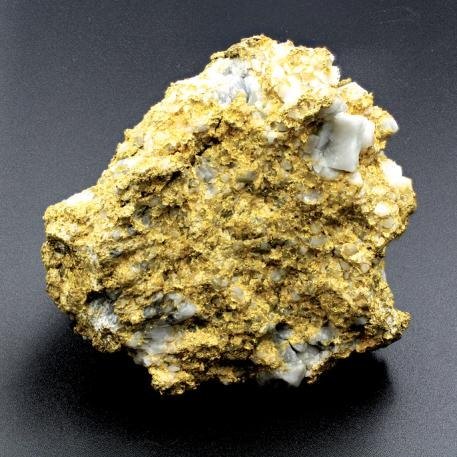
The news release dated January 13, 2026, reports drill results from the ongoing 75,000-meter program at the Munro-Croesus Project. Key highlights include hole MC25-243, which returned 2.4 g/t Au over 73.2 meters, marking the deepest intersection to date at the Argus North Zone (>400 meters vertical depth). Additionally, hole MC25-242 intersected 1.8 meters of 67.3 g/t Au (with visible gold) and 25.7 meters of 5.0 g/t Au. These results expand the Argus North strike length to 225 meters and confirm that the system remains open along strike and at depth, with grades appearing to increase in the deeper parts of the system.
This news is materially positive for several reasons: - Depth Extension: Finding the strongest grades at the deepest levels (over 400m) suggests the system has vertical scale, which is critical for moving from an "exploration discovery" to a "mineable resource." - Continuity and Predictability: Management notes that mineralization is becoming more repeatable, and the geological model is improving. The intersection of "thick zones" west of the north-south fault indicates the system is not truncated. - Grade Thickness: The 73.2m at 2.4 g/t Au (approx. 175 gram-meters) and 25.7m at 5.0 g/t Au (approx. 128 gram-meters) are robust metrics for an Abitibi-based gold project, comparing favorably to established deposits in the Timmins camp. - De-risking: The results support the thesis that Argus North is a significant new gold system rather than an isolated pocket of mineralization.
Onyx Gold is focused on exploration in the Abitibi greenstone belt of Ontario and the Selwyn Basin in Yukon. - Flagship Project: Munro-Croesus Project (109 sq km), 75 km east of Timmins. It includes the historic high-grade Croesus Gold Mine. - Current Focus: The Argus Zone (North, Main, and West), located 150m north of the regional Pipestone Fault. The system is characterized by broad zones of albite-silica altered volcanic rocks with high-grade quartz-vein sub-intervals.