Nuvau Minerals Announces up to $20 Million Brokered Private Placement
Brownfield developer transitioning from base metals to gold-focused explorer with significant infrastructure advantage.
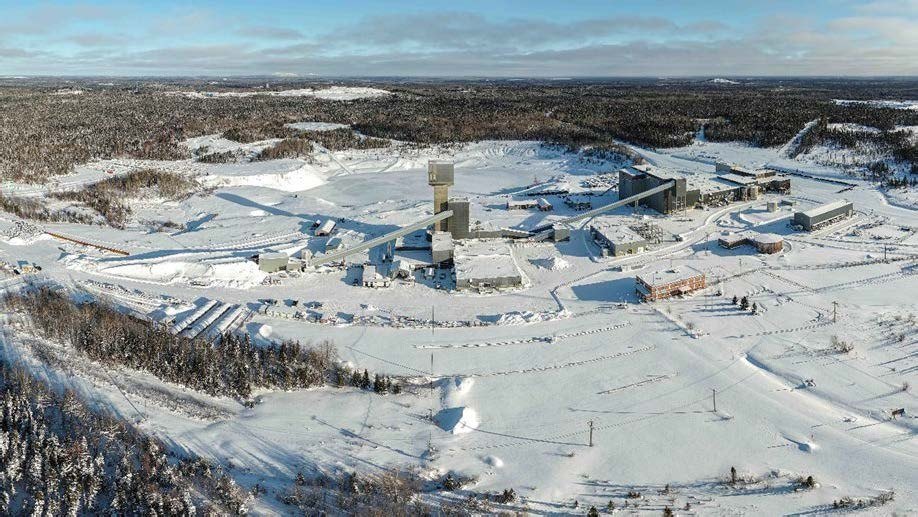
On January 30, 2026, Nuvau Minerals announced a $20 million brokered private placement consisting of $15 million in units ($0.80/unit) and $5 million in flow-through shares ($1.00/share). Each unit includes a half-warrant exercisable at $1.30. Concurrently, the company provided a 2026 strategic update confirming the discovery of a new orogenic gold system at the Bracemac mine and the successful satisfaction of all work requirements to earn a 100% interest in the Matagami Project from Glencore. The final earn-in completion is slated for February 27, 2026. Exploration results from 2025 highlighted significant gold grain anomalies (>2,000 grains) and new VMS (zinc/copper) mineralization at the Renaissance and McLeod zones.
The news is Material - Positive for three primary reasons: - Solvency and De-risking: As of September 30, 2025, Nuvau had only $2.15M in cash against $3.1M in current liabilities. The $20M raise is not just growth capital; it is a vital lifeline that removes immediate "going concern" risk and funds the 2026 program. - Asset Ownership: Transitioning from an "earn-in" player to 100% owner of a 1,300 km² land package with a permitted mill and mine infrastructure (Bracemac-McLeod) is a fundamental valuation re-rating event. This shifts the company from an explorer to a potential near-term producer. - Geological Pivot: The discovery of high-grade gold (e.g., 8.87 g/t Au over 1.05m with visible gold) in a district historically ignored for gold provides a "blue sky" exploration narrative that typically commands higher market multiples than base metals alone.
Nuvau Minerals is focused on the Matagami Mining Camp in the Abitibi region of Quebec. Its flagship Matagami Project (1,300 km²) was acquired from Glencore. Unlike typical explorers, Nuvau controls a permitted mill complex and infrastructure from the Bracemac-McLeod mine, which ceased production in 2022. The strategy is to find new VMS deposits and orogenic gold to feed the existing mill, significantly reducing the capital expenditure required to return to production.