Tajiri trenching at Yono shows three gold zones
Tajiri Resources Expands Yono Surface Footprint as Market Awaits Transition from Excavators to Drill Rigs
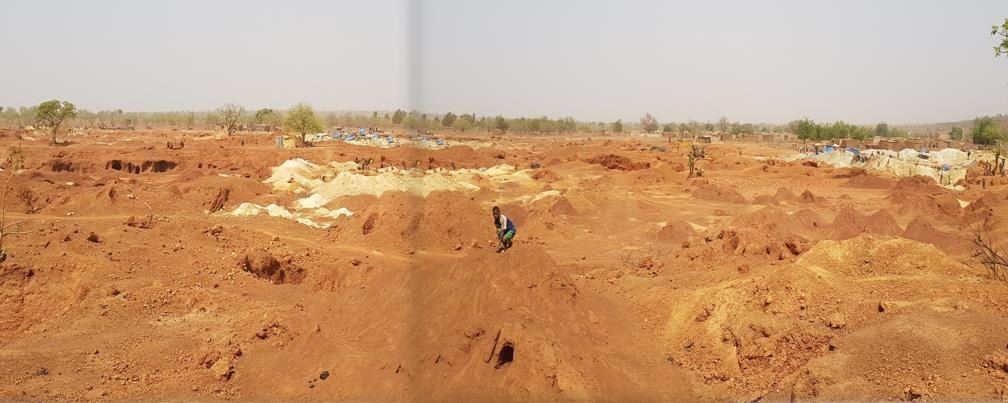
The February 12, 2026, news release reports results from the ongoing Phase II trenching program at the Yono Gold Project in Guyana. To date, the company has completed 1,800 meters of a planned 2,610-meter program. Notable surface intersections include 12m @ 2.4 g/t Au, 20m @ 1.4 g/t Au, and a high-grade pocket of 4m @ 5.5 g/t Au. Executive Chairman Dominic O’Sullivan stated that the project now hosts three mineralized corridors totaling 3 km in strike length. In response to these results, Tajiri is "accelerating" exploration by hiring additional geological staff and mobilizing a second excavator.
The impact is Routine - Positive. While the results confirm the continuity of gold mineralization at the surface and validate the geological model (analogous to the neighboring Oko West and Oko Main Zone deposits), trenching is inherently a surface exploration tool. - Continuity vs. Grade: These results show better width (20m) than the December 2025 release but lower peak grades (5.5 g/t vs. 41.3 g/t). - Operational Shift: The decision to double down on excavators and staff indicates a commitment to the project but also foreshadows an increased "burn rate" without the definitive "discovery" that usually comes from diamond drilling. - Resource Potential: The proximity to ~8.9Moz of gold resources held by G Mining Ventures and G2 Goldfields provides a strong "neighborhood" effect, but Tajiri has yet to prove the mineralization extends significantly at depth.
Tajiri Resources is a junior explorer focused on the Guiana Shield. Its flagship is the Yono Gold Project in Guyana, where it holds a 65% interest (acquired from Nebula Resources). The project is strategically located just 170 meters from major deposits (Oko and Oko West). The company previously focused on the Reo Gold Project in Burkina Faso, but that project was impaired to $1 in 2025 due to jurisdictional uncertainty and a shift in corporate strategy.