Mako Mining Reports Proven and Probable Mineral Reserves of 598 Koz Au and 6.30 Moz Ag Grading 0.327 g/t Au and 3.45 g/t Ag in 56.8 M Tonnes at the Moss Mine in Arizona, Supporting a Post-Tax NPV 5% of US$254 Million and a 15-Year Mine Life at US$3,500/oz
Mako’s Moss reserve validates a 15-year mine life, though gradual ramp-up and low grades temper near-term production upside.
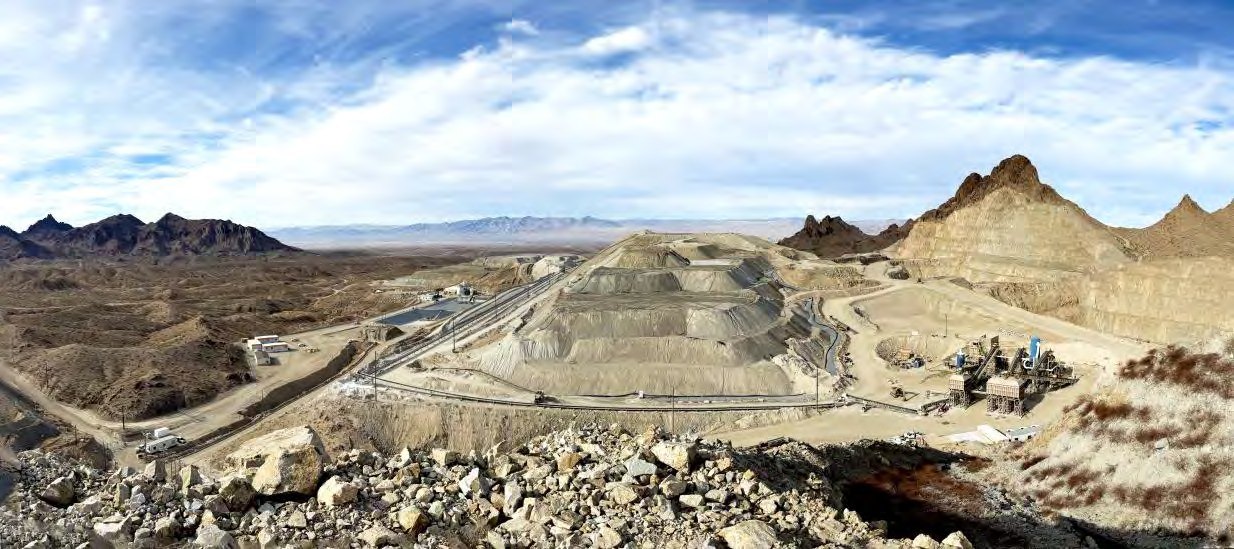
Mako Mining Corp. announced a NI 43-101 compliant Mineral Reserve Estimate for the Moss Mine in Arizona, effective June 30, 2026. The company acquired the Moss property in March 2025 for approximately US$2 million.
The reserve estimate outlines total Proven and Probable Reserves of 597,744 oz Au and 6.30 moz Ag within 56.8 million tonnes. The average grade is 0.327 g/t Au and 3.45 g/t Ag, based on a cut-off grade of 0.14 g/t Au. Metallurgical recoveries assumed in the estimate are 75% for gold and 33% for silver.
The project has a Life of Mine of 15 years, spanning from 2026 to 2039. Average annual production is estimated at 30.9k oz Au, with peak production of 46.1 koz Au projected for 2031. Initial years (2026-2027) are expected to yield approximately 18,000 to 24,000 recovered oz Au.
Mining will utilize a conventional open pit truck-and-shovel method, with a strip ratio of 1.3:1. Processing involves crushing, heap leaching, and Merrill-Crowe recovery. Phased development currently focuses on the Reynolds and Central pits, which contain lower-grade ore, while pre-stripping has commenced at the East and North pits. The transition to the East Pit is expected to introduce higher-grade ore, averaging 0.48 g/t Au with localized grades up to 0.65 g/t Au.
Processing capacity is planned to expand to approximately 3.3M tonnes/year between 2027 and 2030, followed by an expansion to approximately 12,700 tonnes/day from 2031 onwards. Capital requirements include $0 initial capital, with US$86 million in sustaining capital to be funded by cash flow over the Life of Mine.
The post-tax Net Present Value (NPV) at a 5% discount rate is US$254 million, based on metal price assumptions of US$3,500/oz Au and US$50/oz Ag.
Regarding royalty obligations, Mako Mining reached a settlement with Patriot Gold Corp. for a 3% royalty interest. The company paid accrued royalties plus US$1.55 million from collateral, pending Arizona Court approval. Litigation continues with affiliates of Royal Gold Inc. regarding a potential 1% royalty on a portion of the Moss property.
Mako Mining Corp. (MKO) announced a reserve declaration, a standard milestone following its January 2026 resource update. The declaration validates the asset's economics but does not alter the near-term production profile. The market has already priced in the Moss reserve value, with the stock up approximately 115% year-to-date. The gradual ramp-up profile of 18,000 to 24,000 ounces in 2026 and 2027 tempers immediate upside.
The $254 million net present value (NPV) is calculated at a gold price of $3,500 per ounce, which is conservative relative to Q1 2026 realized prices of $4,902 per ounce. While financially sound, the news confirms management's earlier resource announcement and provides a clear life-of-mine framework without a surprise element or guidance raise.
Mako Mining Corp. operates the San Albino Gold Mine in Nicaragua, a high-grade gold-silver operation featuring both open pit and underground mining with a current capacity of approximately 600 tonnes per day, permitted up to 1,000 tpd. The site includes Las Conchitas, a second mining area that is fully permitted and in production.
In the United States, the company owns the Moss Mine in Arizona, a heap-leach gold-silver producer on a 165 km² property. Acquired in March 2025 for approximately $2 million, the mine is currently ramping to steady-state production. Additionally, Mako Mining holds the Mt. Hamilton Gold Project in Nevada, a permitted gold-silver project located along the Battle Mountain Trend. Acquired in March 2026 via a gold stream, the project is targeting initial production in the fourth quarter of 2027.
Internationally, the company is developing the Eagle Mountain Gold Project in Guyana. This PEA-stage development project features a high-grade oxide and saprolite resource, with an Environmental and Social Impact Assessment (ESIA) submitted in March 2026.