ORVANA PROVIDES TAGUAS DRILLING UPDATE: FULL ASSAY RESULTS FROM 2026 DRILLING CAMPAIGN; PROVIDES EL VALLE-BOINAS BROWNFIELD DRILLING UPDATE
Orvana’s second Taguas deep hole confirms a porphyry-epithermal trend, though bulk grades remain sub-economic.
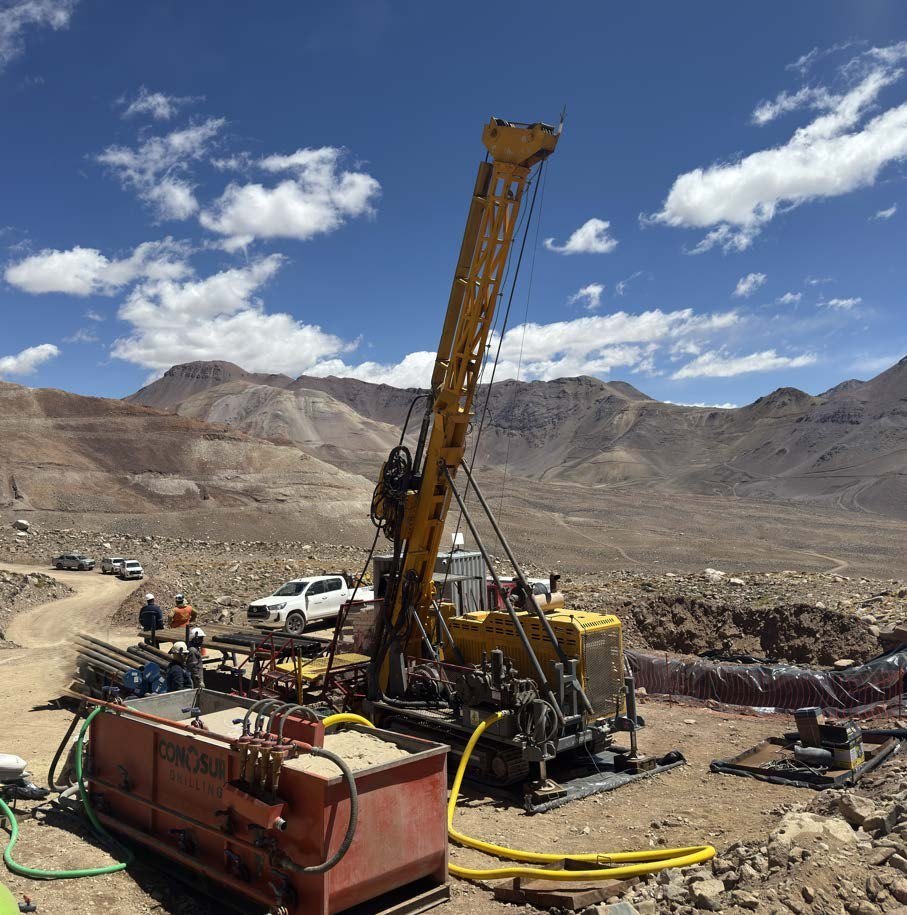
Orvana Minerals Corp. (ORV) released full assay results from the 2026 deep drilling campaign at its Taguas project in Argentina, covering holes TADD‑278 and TADD‑279. Hole TADD‑279, which measured 842 meters, returned a highlight intercept of 1.25 meters at 9.19 grams per tonne gold and 5.55% copper from 398.00 to 399.25 meters. A broader 5.0-meter interval from 398 to 403 meters averaged 2.44 grams per tonne gold, 9.48 grams per tonne silver, and 1.69% copper. Other intervals in TADD‑279 included 17 meters at 0.19 grams per tonne gold and 0.28% copper, as well as 2 meters at 0.18 grams per tonne gold and 38.7 grams per tonne silver.
Results from TADD‑278, previously disclosed as 205 meters at 0.25 grams per tonne gold and 0.12% copper with narrow high-grade zones, were repeated. The company stated that the results support a hydrothermal porphyry system linked to a deeper porphyry source. Additionally, Orvana provided an update on brownfield drilling at El Valle‑Boinás, noting that 3,712 meters were completed in the third quarter of fiscal year 2026, with assays pending.
Orvana Minerals Corp. (ORV) released assay results from the TADD‑279 drill hole at its Taguas exploration asset, confirming the existing geological model. The results were incremental rather than transformational, with bulk grades remaining sub-economic and high-grade narrow veins too thin to support a standalone resource statement.
The market had already priced in a porphyry discovery following earlier TADD‑278 results, which sent the stock to CAD 2.49 in May. On the day of the TADD‑279 release, the stock traded at CAD 1.64, having drifted down from those May highs. The announcement generated no noticeable price spike, indicating the market had already discounted the outcome.
While a single high-grade hit in vein-style mineralization can be material for a junior explorer, this news did not change the deposit’s perceived potential. Near-term value remains driven by the Don Mario ramp-up and Bolivia unrest, which was a material negative in May. The Taguas news does not alter the company’s cash-flow or resource base in any near-term way.
Orvana Minerals Corp. (ORV) is a gold-copper producer and explorer that holds three 100%-owned assets. Its Spanish operations at Orovalle include the El Valle-Boinás and Carlés mines, which produce approximately 34,000 to 37,000 ounces of gold annually. For fiscal year 2026, the company has guided cash operating costs (COC) to range between $2,300 and $2,500 per ounce, with all-in sustaining costs (AISC) projected at $2,700 to $3,000 per ounce.
In Bolivia, the EMIPA and Don Mario assets feature an oxide stockpile plant that is currently undergoing restart. The company produced its first doré in the second quarter of fiscal year 2026, with full ramp-up contingent on resolving civil unrest. FY2026 guidance for this segment calls for 13,000 to 14,000 ounces of gold and 6.7 to 7.5 million pounds of copper. The company’s third asset, Taguas in Argentina, hosts a high-sulfidation epithermal gold-silver oxide resource estimated at 55 million tonnes grading 0.49 grams per tonne gold-equivalent (inferred), alongside a newly tested deep porphyry target.
As of March 31, 2026, Orvana Minerals reported cash of approximately $48 million USD against total debt of roughly $94 million USD, resulting in net debt of about $46 million USD. The company’s market capitalization stood at approximately $224 million CAD, based on a share price of $1.64 CAD.