U.S. EXIM's Board Advances Proposed $2.7 Billion Loan to Congressional Notice & Perpetua Announces Improved Project Economics
U.S. National Security Asset Anchored by $2.7 Billion Federal Backing and Strategic Gold Reserves
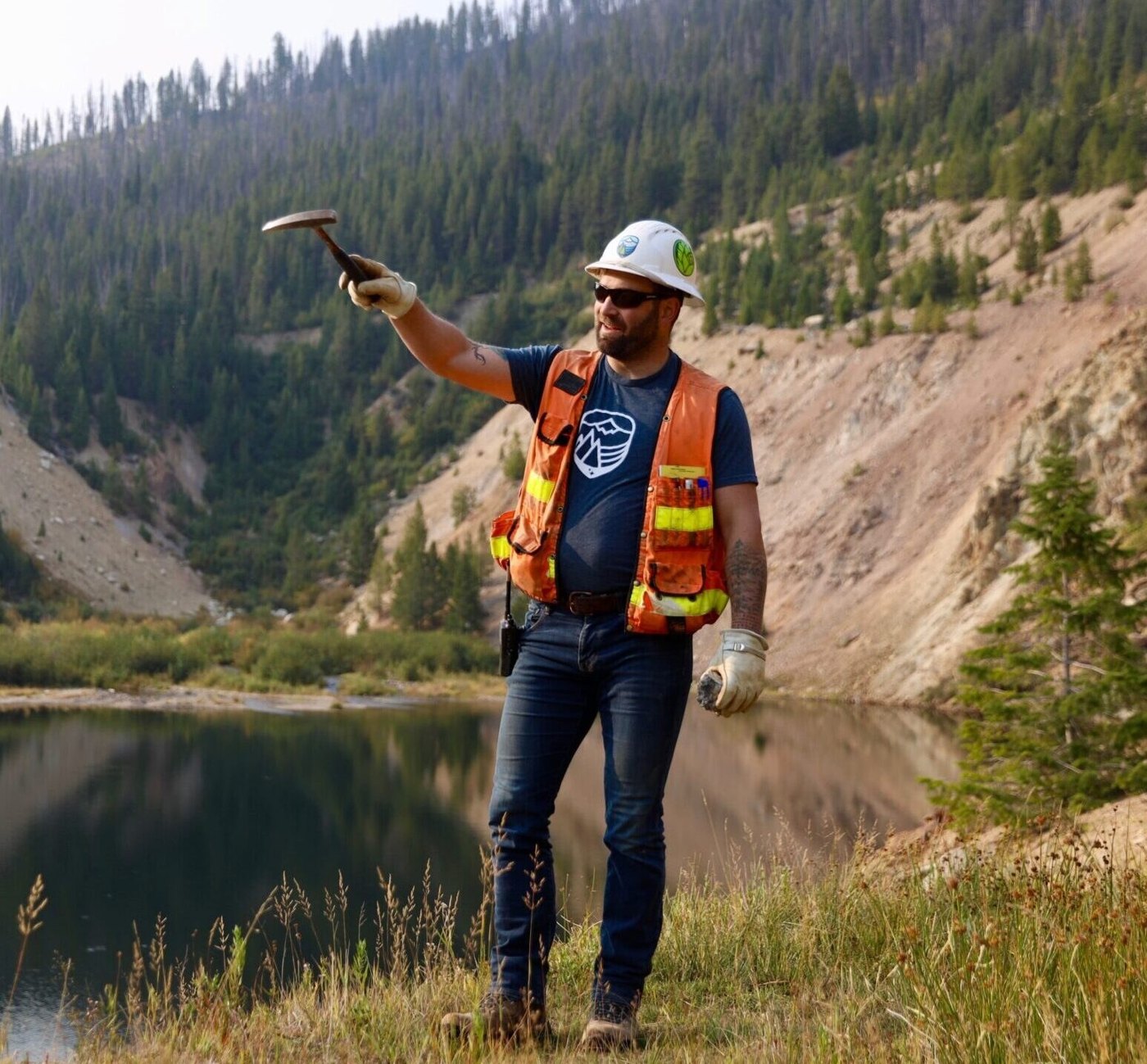
The most recent news (March 31, 2026) confirms that the U.S. Export-Import (EXIM) Bank Board has unanimously moved to notify Congress of a proposed $2.7 billion senior secured loan ($2.2 billion direct loan plus capitalized interest/fees) to fund the Stibnite Gold Project. Simultaneously, Perpetua released an updated Technical Report Summary (TRS) showing significantly improved economics: an after-tax NPV (5%) of $3.5 billion at a $3,250/oz gold base case, rising to $6.1 billion at $4,500/oz gold. The company reports a massive cash balance of $714 million as of year-end 2025, which, combined with the loan, fully covers the $2.576 billion estimated construction cost.
This news is a major de-risking event that transitions the company from "permitted explorer" to "fully funded developer." - Financing Certainty: The $2.7 billion loan effectively removes the "funding gap" risk that plagues most large-scale mining projects. The 25-day congressional notice period is the final procedural hurdle before a final Board vote. - Economic Robustness: The jump in NPV from previous estimates (which were closer to $1.9B in earlier 2025 reports) to $3.5B–$6.1B reflects the leverage to rising gold prices and the strategic value of antimony. - Capital Sufficiency: With $714M in cash, the company has a rare "fortress balance sheet" for a pre-production junior, providing a buffer against the inflationary CAPEX pressures noted in the updated $2.576B construction estimate. - Strategic Validation: The unanimous EXIM support underscores the project's status as a critical infrastructure asset for U.S. defense (antimony) and energy independence.
Perpetua Resources is developing the Stibnite Gold Project in Idaho, USA. It is one of the highest-grade open-pit gold deposits in the U.S. (4.8 Moz Reserves). More importantly, it contains the only domestic reserve of antimony (148 Mlbs), a critical mineral used in munitions and large-scale batteries. The project is a "brownfield" site, meaning mining will involve environmental remediation of legacy impacts from WWII-era operations.