Drill Results
American Pacific uses black light scanning for Madison
USGD · Price
Executive Summary
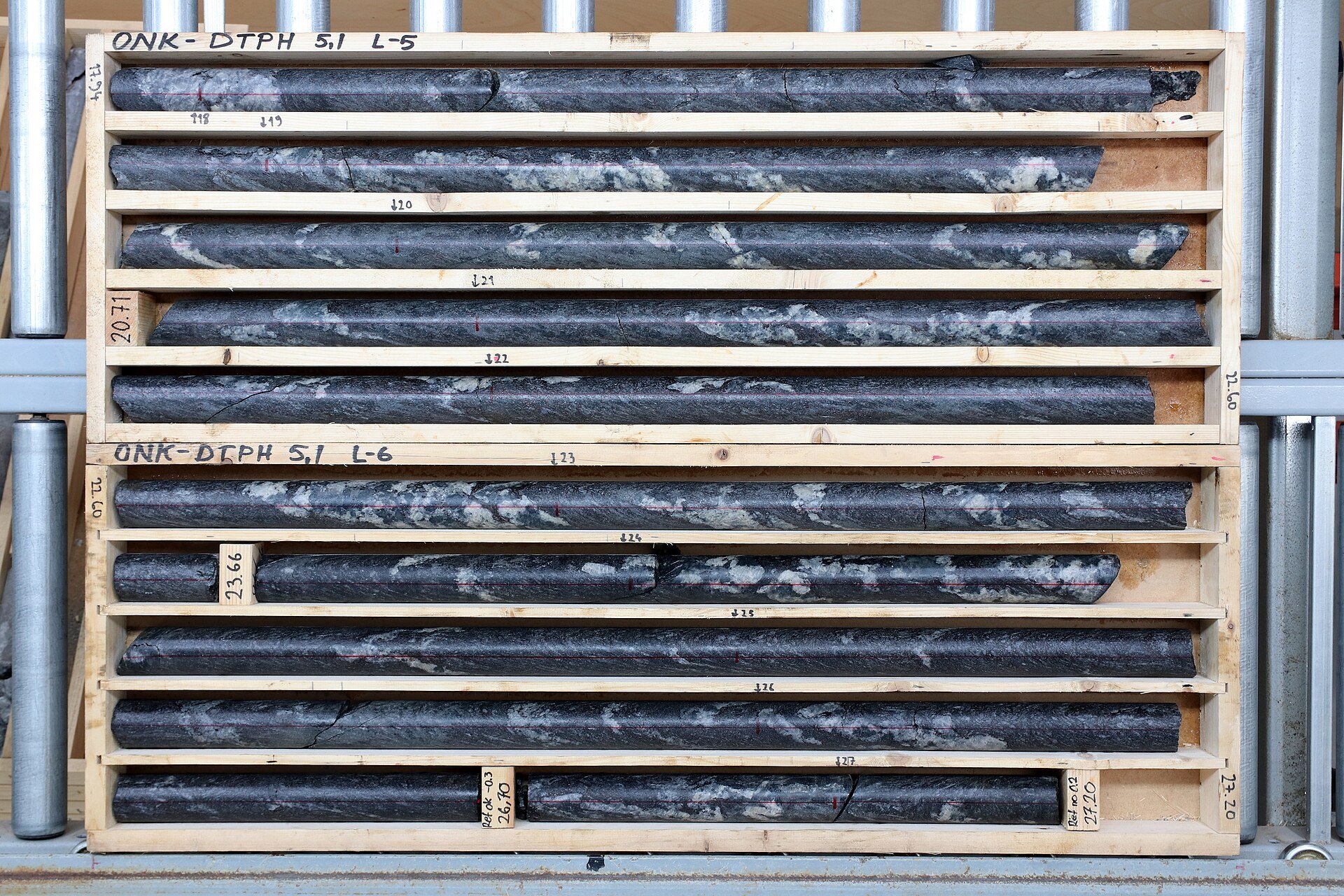
- American Pacific Mining Corp. has identified new geological anomalies at its Madison Copper-Gold Project in Montana using a fugitive calcite black-light technique in newly exposed underground workings.
- The company gained access to an additional 150 feet of ramp access due to lower water levels, allowing for the deployment of ultraviolet (black light) scanning to detect fluorescing calcite veins.
- This technique helps distinguish mineralized veins from non-fluorescent ones, providing structural data that supports the hypothesis that Madison may host a cluster of porphyries rather than a single center, refining vectors toward porphyry and carbonite replacement deposit targets.
Key Details
- Location: Madison Copper-Gold Project, Montana.
- New Access: Fieldwork revealed an additional 150 feet of newly exposed ramp access, made possible by lower water levels during a short seasonal window.
- Technique Applied: Ultraviolet (black light) scanning to search for fugitive calcite, a method learned from exploration geologist Dr. Peter Megaw.
- Geological Findings:
- Identified at least one distinct population of fluorescing veins among numerous non-glowing vein sets.
- Fluorescence in calcite indicates trace amounts of manganese and lead, which are indicators of carbonate replacement associated with skarn, Carbonite Replacement Deposits (CRD), and distal porphyry mineralization.
- Fugitive calcite represents areas exhaust proximal to where sulfide mineralization with stronger metal concentrations has formed.
- Structural Analysis: Plotting these veins on stereonets provides additional structural information to refine vectors toward porphyry and carbonite replacement deposit targets.
- Working Hypothesis: The data supports the hypothesis that Madison may host a cluster of porphyries (multiple sources) rather than a single textbook center.
- Qualified Person: Eric Saderholm, PGeo, Managing Director of Exploration.
Notable Quotes
- "The use of ultraviolet lights to detect fugitive calcite is a skill learned while working underground in Utah with Dr. Megaw." - Eric Saderholm, Managing Director of Exploration.
- "Fugitive calcite represents exhaust proximal to where sulphide mineralization has formed containing stronger metal concentrations. It is a simple and inexpensive, yet highly effective tool for this type of mineral exploration." - Eric Saderholm, Managing Director of Exploration.
More from American Pacific Mining Corp
Jun 03, 2026 · 03:06