Anfield Energy Delivers Strong First-Half 2026 Momentum with Exceptional PEA Economics and Clear Path to Near-Term Production
Anfield completes Phase I at Velvet-Wood and updates its PEA, confirming robust economics for its hub-and-spoke uranium-vanadium strategy.
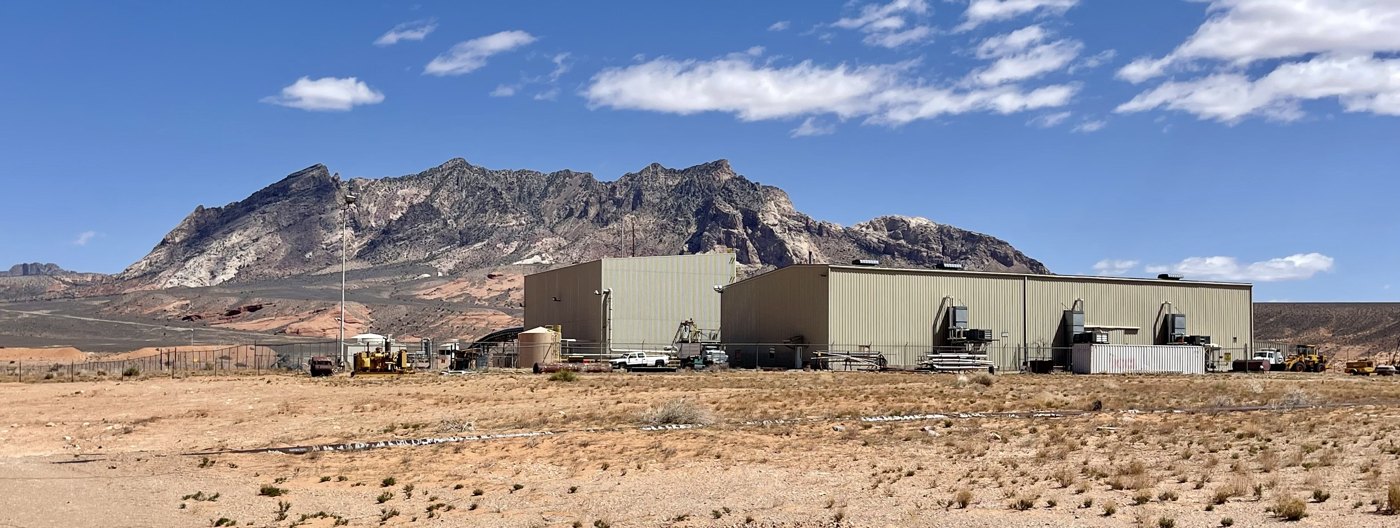
Anfield Energy Inc. (AEC) released a comprehensive first-half 2026 corporate update outlining operational, permitting, and economic progress across its hub-and-spoke uranium and vanadium portfolio. An updated Preliminary Economic Assessment (PEA) confirms robust project economics, citing a 106% pre-tax internal rate of return (IRR), a US$606 million net present value (NPV) at an 8% discount rate, and a rapid 1.3-year capital expenditure payback period. Production is targeted for late 2026 at the Velvet-Wood project and 2027 at Shootaring.
At Velvet-Wood, Phase One construction was completed in June 2026, encompassing topsoil stripping, portal rehabilitation, temporary power installation, and road build-out. The project is now advancing to Phase Two. Meanwhile, at Shootaring Canyon Mill, drilling of eight new monitoring wells was completed in May 2026 to establish baseline groundwater data. Engineering studies and refurbishment efforts are advancing to convert the mill license from care-and-maintenance to operations.
On the regulatory front, the JD-8 Plan of Operations was revised and submitted to the Department of Energy (DOE) and the Colorado Division of Mining and Reclamation (DRMS) in April 2026. Additionally, a Notice of Intent (NOI) for the SM-18 drilling program was submitted in April 2026 to verify and expand resources. A hearing has been filed following initial DRMS denials.
Strategic acquisitions include the completed purchase of B.R.S. Inc. (BRS Engineering) in May 2026 to secure in-house technical expertise, and the receipt of an underground haul truck from Young’s Machine in June 2026. Major shareholder Uranium Energy Corp. (UEC) increased its stake in the company, which also entered a three-month, US$200,000 media services agreement with Goldwyn Media LLC.
Anfield Energy Inc. (AEC) released a progress report on June 25, 2026, reiterating the Preliminary Economic Assessment (PEA) economics previously filed on May 4 and June 18, 2026. The update confirms that management is executing on the hub-and-spoke timeline, with the completion of the Velvet-Wood Phase One and the drilling of mill monitoring wells.
The release contains no new financial guidance, revised resource estimates, or unexpected regulatory breakthroughs. Instead, it highlights routine corporate actions, including a media services agreement and an increase in the UEC stake. Execution risk remains present as the SM-18 hearing and JD-8 permitting processes continue to be pending.
The report underscores the company’s current financial position, noting that it is burning cash to fund pre-production capital expenditures of approximately US$97 million over 12 months, as outlined in the PEA, while generating zero revenue.
Anfield Energy Inc. (AEC) operates a hub-and-spoke uranium and vanadium production strategy across the Western United States. The company’s central hub is the Shootaring Canyon Mill in Utah, one of only three fully licensed, permitted, and constructed conventional uranium mills in the country. Currently licensed for 750 tons per day, the facility is targeting an upgrade to 1,000 tons per day and an annual capacity of 3 million pounds of U3O8.
The company’s spokes include the Velvet-Wood, Slick Rock, JD-8, and SM-18 projects, along with other Department of Energy leases in Colorado and Utah. The flagship Velvet-Wood Mine, located in Utah, is a past-producing operation that yielded 4.6 million pounds of eU3O8 from 1979 to 1984, with a Measured and Indicated resource grade of 0.29%. Phase One construction at Velvet-Wood is complete, while Phase Two focuses on dewatering, underground rehabilitation, and ore pad construction, with target production set for late 2026. This strategy allows Anfield to feed ore from multiple mines into the centralized Shootaring mill to maximize throughput and minimize per-unit processing costs.