Platinum Group Metals Ltd. Reports 2026 Annual Results
Platinum reported a narrowed FY26 loss driven by interest income, while its offtake agreement remained unsigned and the at-the-market offering program stayed idle.
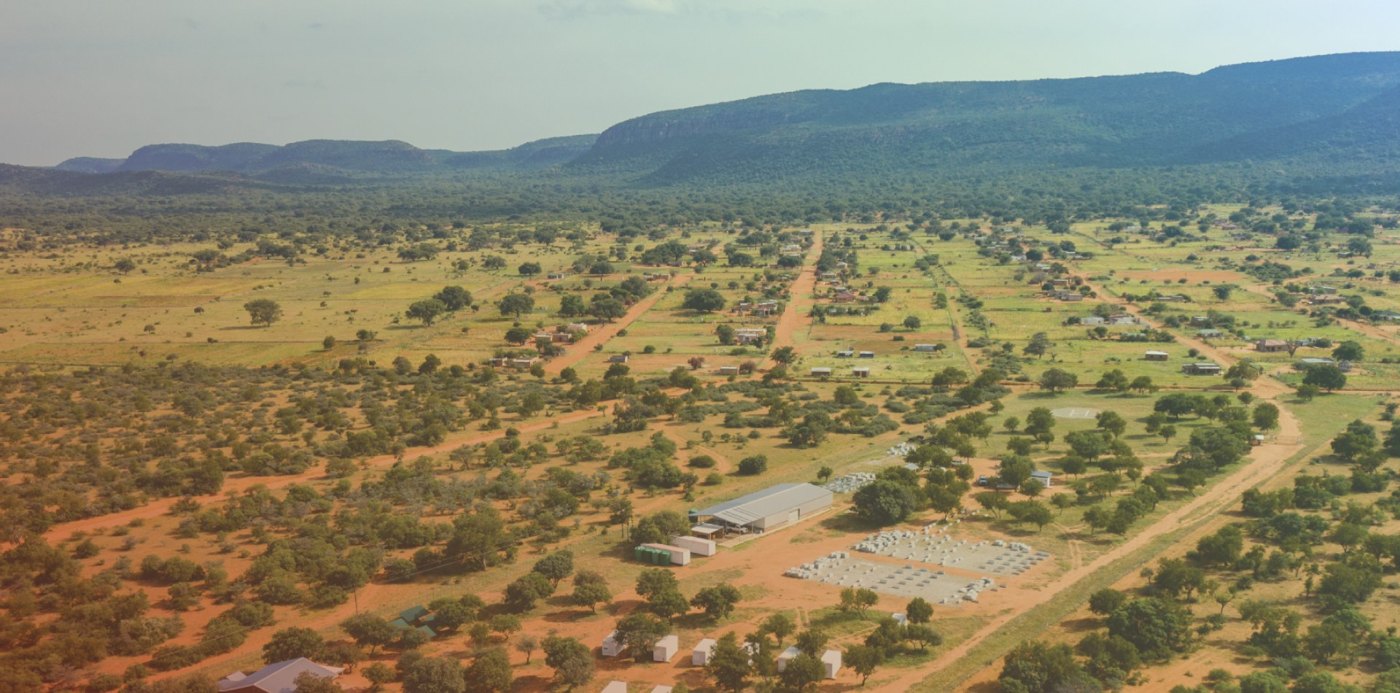
Platinum Group Metals Ltd. (PTM) released its annual report for the fiscal year ended August 31, 2026, marking the company’s fourth year as a pre-revenue developer with no production, revenue, or segment disclosure. The report highlights the cost and dilution arithmetic associated with the Waterberg work programme, alongside the two critical gating items of construction financing and concentrate offtake.
Financially, the company reported a net loss of $3.07 million, an improvement from the $4.54 million loss in the prior year. Loss per share decreased to $0.02 from $0.04. General and administrative expenses rose slightly to $3.74 million from $3.66 million, while share-based compensation fell to $1.02 million from $1.19 million. The primary driver of the improved bottom line was finance income, which surged to $1.47 million from $0.28 million, aided by a foreign exchange gain of $0.30 million compared to $0.10 million the previous year. Balance sheet items showed accounts receivable at $0.31 million (up from $0.08 million) and accounts payable and other liabilities at $1.74 million (up from $0.78 million). Expenditure on the Waterberg project, before partner reimbursements, totaled $3.60 million against $2.0 million in the prior year, bringing the accumulated net costs capitalized to the project to $57.26 million from $49.2 million. Total historic property spend stands at approximately $94.3 million.
Regarding capital markets, the company’s 2026 At-The-Market (ATM) facility, which had a $60.0 million capacity signed on March 10, 2026, saw minimal activity. Only 1,059,233 shares were sold in the third quarter at an average price of $1.90, generating $2.01 million in gross proceeds and $0.05 million in costs. No sales occurred in the fourth quarter or subsequently, and the company stated it does not anticipate making additional sales under this facility. In contrast, the 2025 ATM facility, with a $50 million capacity, was completed on January 23, 2026. This program sold 22,726,804 shares at an average price of $2.20, raising $50 million in gross proceeds before $1.25 million in agent costs. Of that total, 13,785,310 shares were sold at an average price of $2.67, raising $36.82 million in the six months to February 28, 2026.
Operational updates for the Waterberg project indicate that T-Zone metallurgical drilling was completed on July 31, 2026. The work involved 28 deflections in 12 existing NQ holes, recovering 703 kg of material, with 370 kg of composites sent to SGS South Africa for bench-scale, lock-cycle, and MF1/MF2 circuit recovery tests. The drilling was completed under budget with fewer deflections than planned, and the suitability of the Jameson Cell is currently under evaluation.
Financially, the T-Zone Study received a supplemental FY2026 budget approval of Rand 27.4 million (approximately $1.69 million) on May 8, 2026, following board approval on March 27, 2026. A further Rand 22.69 million (approximately $1.33 million) is expected to be approved as part of the upcoming fiscal 2027 budget. Work is being conducted by Stantec, DRA South Africa, and Fraser McGill, though no completion date was provided. The Stage Six budget, approved on September 17, 2025, covered work through August 31, 2026, and has now expired; no FY2027 Waterberg budget has been stated as approved. The Pre-Construction Program, approved in principle on October 18, 2022, had $21.0 million approved in total, with approximately $9.1 million still outstanding at current exchange rates.
Physical infrastructure work has progressed with road upgrades commenced and borrow-pit aggregate terms agreed post-year-end. A temporary 22kV/3MVA Eskom feed is in detailed engineering for a approximately 30km line. Early Dawn water infrastructure is complete, and Ketting water works have been approved by the Capricorn District Municipality, awaiting community consent. A medical clinic upgrade was completed for approximately Rand 2.2 million, and Seshane Primary School works commenced for approximately Rand 835,000. The 2026 Social and Labour Plan (SLP) was submitted to the Department of Mineral Resources and Energy (DMPR) in late 2025 but remains unapproved.
Ownership structure in the Waterberg project shows Platinum Group Metals holding 37.62% directly and 12.97% indirectly via a 49.90% interest in Mnombo (which holds approximately 50.59% of the project). Mnombo holds 26.00%, HJM holds 21.95% (with JOGMEC holding 75% and Hanwa 25% of HJM), and Implats holds 14.43%. Implats has not funded cash calls since December 2023, resulting in a dilution of approximately 0.57%. Platinum Group Metals funded the shortfall and acquired the corresponding direct interest.
On the commercial front, no offtake terms have been agreed. The company has held discussions with all South African integrated producers and has conducted a parallel study over the past three years regarding a smelter or base-metal refinery in Saudi Arabia or South Africa. Exporting concentrate or matte would require South African government authorization, with senior officials expressing a preference for in-country beneficiation.
In a separate venture, Lion Battery Technologies is funded equally by Valterra and Platinum Group Metals, with an aggregate investment of $4.8 million to August 31, 2026. Effective July 20, 2026, the investment agreement was reset to allow up to $8.0 million in aggregate over three to four years. A separate Lion
Platinum Group Metals Ltd. (PTM) reported that construction financing and concentrate offtake terms remain unresolved, marking the fifth consecutive quarterly release with no progress on these critical items. The company’s language has remained consistent since November 26, 2025, when it stated it was "actively pursuing financing and off-take solutions" with "no off-take terms finalized yet." Subsequent updates in January 2026, April 2026, July 2026, and the most recent November 24, 2026 filing all confirmed that no terms have been agreed to date.
Meanwhile, partner Implats, which holds an operating smelter and a right of first refusal over the concentrate, has not funded a cash call since December 2023. This nearly three-year hiatus is disclosed as an administrative footnote, yet it highlights a situation where Platinum Group is funding the shortfall alone, converting a shared burden into a sole financial responsibility for a company with no revenue.
The company’s earnings improvement was driven by weak factors. A $1.47 million swing in the loss was almost entirely attributable to finance income, which rose from $0.28 million to $1.47 million, representing interest on cash raised in the 2025 ATM, plus a $0.30 million foreign exchange gain. Core general and administrative expenses rose to $3.74 million from $3.66 million. Excluding interest and FX, the operating loss remained roughly flat to slightly worse. Interest income is expected to decline as ATM proceeds are spent on the pre-construction programme and the T-Zone Study. Prior-period context not included in the current release shows an operating cash outflow of $4.05 million for the nine months to May 31, 2026.
Dilution pace decelerated sharply. FY2025 plus the stub to January 23, 2026, raised $50 million at an average price of $2.20, plus $1.0 million at $1.26 in a May 2025 placement. FY2026 added only $2.01 million at $1.90. The company sold 22.7 million shares at $2.20 into a market now trading at $1.17, raising capital above the current price and narrowing the loss per share. However, total ATM issuance of approximately $52 million against approximately $94.3 million of cumulative property spend since inception indicates that much of the asset has been funded by equity issuance rather than by partners or cash flow.
The 2026 ATM statement disclosed that no further sales are anticipated under a $60 million facility, of which approximately $58 million remains unused. The programme expires on December 13, 2026, meaning capacity will lapse with significant undrawn funds. This suggests management either believes it has a non-ATM funding route, such as partner equity contribution, project debt, or a metal stream, or that it will not sell stock at the current price of $1.17. The latter implies an unfunded gap and suggests a new base shelf will be required, as the existing $250 million shelf dated November 13, 2024, runs on the same December 2026 timetable.
Operational progress included completing the T-Zone metallurgical programme "under budget and with fewer deflections than expected." This provides the first hard confirmation that the 703 kg sampling target was achievable and feeds the T-Zone Study. However, 703 kg of core and a Rand 27.4 million desktop study do not move a $776 million peak-capital project. Slippage risk in the study timetable is evident; the MD&A states the T-Zone Study should conclude "by approximately the end of calendar 2026," while the September 2026 investor presentation puts completion at Q1 2027. The release itself gives no date. Given the pre-construction programme approved in October 2022 still has $9.1 million outstanding four years later, and the Stage Six budget expired August 31, 2026, with the FY2027 budget not yet approved, a Q1 2027 slip on the study should be considered the base case.
The strategic pivot to T-Zone is supported by reserve grades of 3.84 g/t 4E versus 2.68 g/t for F-Central, and a better prill split for the current price environment: 51% palladium, 29% platinum, 19% gold, and 1% rhodium, compared to 66% palladium and only 5% gold for F-Central. The gold weighting is explicitly tied to "the current price and outlook for gold." However, T-Zone hosts only 2.37 moz of the 23.41 moz reserve (10%). Ninety-two percent of its planned production comes from mining widths of 2.4–15 metres, versus F-Central's 107-metre true widths with 87% of production above 15 metres. The company concedes T-Zone mining carries "a higher cost per tonne." The staged route lowers upfront capital by deferring power lines, paste backfill, milling capacity, and underground conveyors, but does not change the fact that the F-Central base case is the value driver and is not being built.
Base-case economics remain challenging. The September 2024 DFS Update carries a post-tax NPV8 of $569 million and an IRR of 14.2% on $776 million peak capital, based on prices of $1,605/oz platinum, $1,062/oz palladium, $6,209/oz rhodium, $1,812/oz gold, and USD/ZAR 20.07. A 14.2% IRR on a five-year build in South Africa is at or below most mining hurdle rates. While spot prices are higher, with a basket of approximately $1,745/oz (approximately 30% above base case) and gold spot at $4,325/oz, the company has not published a spot-price NPV. A 16.00 USD/ZAR spot versus 20.07 in the DFS represents roughly 20% rand strength, which raises the
Platinum Group Metals Ltd. (TSX: PTM; NYSE American: PLG) is a Vancouver- and Johannesburg-based development company with no producing assets and no revenue. Its sole material property is the Waterberg PGM project on the Northern Limb of the Bushveld Complex, South Africa, which it discovered and operates. The company holds 37.62% direct plus a 12.97% indirect interest through a 49.90% holding in BEE partner Mnombo, for ~50.59% combined. JV partners are Mnombo (26.00%), HJM (21.95%, being JOGMEC 12.19% and Hanwa 9.76% consolidated, with JOGMEC funding 75% and Hanwa 25% of future HJM equity) and Implats (14.43%).
Waterberg is designed as a fully mechanised, shallow, decline-access bulk underground PGM mine with by-product copper and nickel. The governing study is the Independent DFS Update effective August 31, 2024, filed October 9, 2024:
- Proven and probable reserves: 23.41 moz 4E in 246.20 Mt at 2.96 g/t 4E; mine life 54 years.
- Measured and indicated resources 33.756 moz 4E; inferred 8.523 moz; total 42.279 moz 4E.
- Steady-state production 353,208 oz 4E per annum; LOM average cash cost $658/oz 4E on-site; projected lowest-quartile cost position.
- Post-tax NPV8 $569M, post-tax IRR 14.2%, LOM post-tax cash flow $6.50 billion, peak project capital $776M.
- Construction timeline: 5 years build plus 3 years ramp to steady state.
- Base case metal prices: Pt $1,605/oz, Pd $1,062/oz, Rh $6,209/oz, Au $1,812/oz, Cu $4.53/lb, Ni $9.73/lb, USD/ZAR 20.07.
- Reserve geometry: T-Zone 19.23 Mt at 3.84 g/t 4E (2.37 moz), shallow from ~140m, 2.4–20m mining widths. F-Zone 226.97 Mt at 2.88 g/t 4E (21.03 moz), true mining widths up to 107m with ~87% of production from widths above 15m.
- Permitting: Mining Right granted February 2021; Environmental Authorization secured; SLP in place. Construction readiness declared October 2022. No construction decision.
At the September 2026 spot basket of ~$1,745/oz 4E (roughly 30% above the DFS base case) with platinum at $1,792/oz and gold at $4,325/oz, the project would screen materially better than the published $569M NPV — but the company has not published that arithmetic, and the stronger rand (16.00 versus 20.07 in the DFS) cuts the other way on rand-denominated costs.