A Critical Moment for Emerita: Protecting Shareholder Value and Securing the Future of Your Investment
Emerita’s board initiates a strategic review amid escalating proxy tensions and heightened insolvency risks.
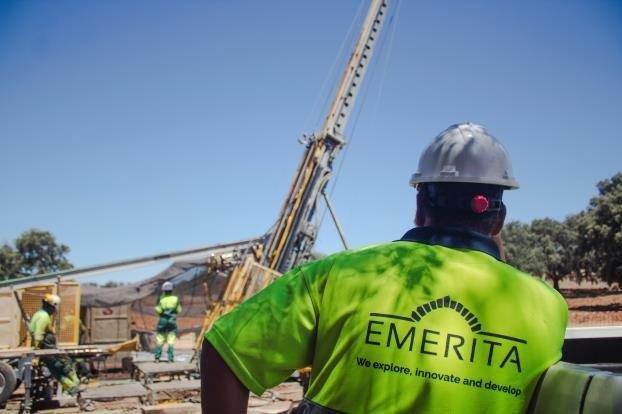
Emerita Resources Corp. (EMO) Executive Chairman Joseph Belan released a shareholder letter on November 16, 2026, at 18:26, coinciding with a companion announcement that the Board has approved a strategic review. The letter outlines a formal review of strategic alternatives, a scope that includes attracting institutional and international capital, equity, royalty, and other financings, and identifying strategic or cornerstone investors. The Board also intends to explore joint ventures, project-level partnerships, transactions involving direct interests in IBW, and strategic, financing, or settlement alternatives for the Falcon claims. Additionally, the review covers corporate combinations, mergers, or a potential sale of the Company.
The Board stated that the review is driven by financial considerations, specifically a market price it believes does not reflect asset value and financing uncertainty stemming from a requisition. The letter emphasized that the Company "urgently needs financing following the delivery of our positive PFS." This review comes amid an activist dispute involving the Zip Two Trust and CDS & Co, which seeks to replace three directors and fill a vacancy, totaling four seats. Associated beneficial holders include PM Super Fund, PM1 Trust, Scott Blair, Andrew Elinesky, Norman Findlay, Wayne Peters, and Edward Truant. The letter characterizes this effort as an attempt to take control "without having paid any premium."
The Board warned that a change in Board composition could trigger change-of-control provisions under the credit facility, accelerating repayment of approximately US$7.5 million. The combination of restricted financing and accelerated debt "could create an urgent liquidity crisis and push Emerita toward insolvency or formal restructuring," potentially followed by a discounted financing or restructuring that transfers "a substantial economic interest" to the Peters group. The letter also disclosed key-person flight risk, noting that Joaquin Merino and Agne Ahlenius have advised the Board they will resign if Mr. Peters' nominees are approved at the requisitioned meeting.
The PFS serves as the value anchor, citing an after-tax NPV of US$776 million at 8%, an after-tax IRR of 23.5%, and initial capital of "approximately US$567 million." The Chairman conceded that the PFS leaves open issues regarding permitting, metallurgy, reserve development, concentrate marketing, and financing. He acknowledged shareholder questions concerning the contribution of pyrite concentrate, assumptions regarding gold and silver recovery, and post-flotation processing.
Regarding governance and compensation, Belan’s base salary is C$225,000, with no cash bonus or share-based compensation. No new equity incentive plan has been adopted since the former plan was voted down in August 2026. Belan purchased shares in the market once trading restrictions lifted. Oscar Cabrera and Peter McRae joined the Board in September 2026, and the three directors who received majority-withhold votes have resigned.
On the litigation front, specialized counsel has been engaged in Canada and Brazil regarding the Falcon claims. The Board rejected immediate injunctive relief as a "PR stunt," confirmed receipt of Lithium Ionic's Statement of Defence, Crossclaim, and Counterclaim, and reiterated a constructive-trust remedy. Settlement remains an option, with the Board stating, "All options are being considered." The letter framed its narrative with the phrases "Proof over Promotion" and "Emerita is first and foremost a mining development company," while also attacking Wayne Peters' prior Aznalcóllar predictions.
Emerita Resources Corp. (EMO) has formally placed a potential sale of the company on the table, marking a shift from speculation to an approved Board workstream involving corporate combinations and mergers. This development represents new information relative to prior releases, distinguishing it from the unsolicited and rescinded May 2026 Denarius approach. Concurrently, management has publicly quantified a solvency pathway, warning that a Board change could lead to insolvency or formal restructuring. This disclosure, which notes the company’s inability to raise equity due to instability, will be reviewed by lenders, prospective offtakers, Andalusian permitting authorities, counterparties in the Falcon litigation, and potential investors, thereby raising the cost and reducing the pool of available financing alternatives.
The company faces a hard, near-term liability with an acceleration trigger. Approximately US$7.5 million has been drawn under the Nebari facility, with change-of-control provisions that the Board states could be triggered by a four-seat Board change. The reported balance sheet corroborates this debt, showing total debt of C$9.0 million as of June 30, 2026. The market has repriced the stock, failing to validate the Preliminary Feasibility Study (PFS). The stock closed at C$0.29 on October 29, 2026, the day the PFS was released, and C$0.29 the day before. It subsequently fell to C$0.27 on October 30, C$0.22 on November 2, C$0.20 on November 4, C$0.19 on November 5, and C$0.17 on the date of this release. The PFS, which cites an NPV of US$776 million against a market capitalization of roughly C$50 million, did not serve as the catalyst management expected. The market’s implicit verdict suggests the NPV is unfundable rather than unrecognized.
The core financing challenge involves an initial capital requirement of US$567 million, which is roughly 15 times the entire market capitalization and 60 times the C$9.1 million of cash on the June 30, 2026 balance sheet. Even a fully equity-funded solution at the current C$0.17 price would require approximately 4.6 billion new shares, representing around 15 times the existing 296.6 million share count. This arithmetic necessitates that the strategic review include a partner or a sale. The scenario of US$776 million of NPV discounted at 8% over 21 years, requiring US$567 million upfront, cannot be converted into per-share value for existing holders without a counterparty.
Management’s track record shows significant slippage between promises and delivery. The PFS timing slipped twice: initially, an SLR contract awarded on December 3, 2025, implied completion by June 2026; by January 12, 2026, the target was the end of the second quarter of 2026; by June 30, 2026, it was delayed to the third quarter of 2026 due to metallurgical optimization; and by September 30, 2026, it was further delayed to the "coming weeks." The PFS was ultimately delivered on October 29, 2026, roughly four to five months late against the December guidance and past the revised Q3 target. The Mineral Resource Estimate (MRE) also slipped, with a January 2026 promise of "in coming months" giving way to a delay caused by NSR cost inputs, with the MRE finally landing inside the PFS on October 29, 2026 (effective July 17, 2026).
While size growth was delivered, with Indicated resources rising from 18.96 Mt in February 2025 to 26.1 Mt and Inferred resources from 6.80 Mt to 9.9 Mt—consistent with claimed increases of +37% and +46%—grade fell through conversion. The February 2025 Indicated resource carried 2.88% Zn, 1.42% Pb, 0.50% Cu, 66 g/t Ag, and 1.28 g/t Au. The October 2026 Probable Reserve carries 2.30% Zn, 1.13% Pb, 0.45% Cu, 53 g/t Ag, and 1.07 g/t Au. Dilution and cutoff explain most of this decline, but roughly 15–20% of headline grade did not survive into reserves for a company pitched on high-grade attributes. Aznalcóllar timing has also failed repeatedly; administrative rulings were expected "in two to three months" in December 2025, "in the coming months" in January 2026, and remained pending as of June and September 2026. As of this release, roughly eleven months after the first guidance, there is still no judgment. Exploration promises for Nuevo Tintillo drilling, targeted for 2026, have not been met, with only mapping, sampling, permit renewal, and geophysics reported as of November.
Regarding warrants and compensation, the Chairman stated that no team member has received equity-based compensation since the plan was voted down. However, the nine months to June 30, 2026, carry C$3,733,771 of stock-based compensation, representing about 7.4% of the current market capitalization and roughly 60% of the C$6.27 million operating cash outflow for the period. These grants pre-date the August vote, though the letter’s framing is selective.
Prior-period context not disclosed in today’s release shows that for the nine months to June 30, 2026, revenue was nil, SG&A was C$9.74 million, and the net loss was C$10.83 million. Operating cash flow was −C$6.27 million, investing cash flow was −C$12.22 million, and the net change in cash was −C$18.12 million. Cash stood at C$9.12 million, down from C$27.0 million at the prior year end. Working capital was C$10.
Emerita Resources Corp. (EMO) is a pre-revenue mineral exploration and development company with its corporate and technical base in Sevilla and an administrative office in Toronto. The company operates in Spain and holds no revenue, production, or reserves other than those declared in the October 2026 Preliminary Feasibility Study (PFS).
The company’s flagship asset is the 100%-owned Iberian Belt West (IBW) project, comprising 1,545 hectares in the Huelva Province of the Iberian Pyrite Belt. The property hosts three volcanogenic massive sulphide deposits: La Romanera, La Infanta, and El Cura. The PFS was released on 2026-10-29, effective 2026-07-17, with the corresponding NI 43-101 technical report filed on 2026-11-03.
The PFS outlines headline economics of an after-tax NPV (8%) of US$776 million and an after-tax IRR of 23.51%. The project features a 21-year life of mine with a payback period of 1 year 11 months from production start, or 6 years 11 months from initial investment. At September 2026 spot prices, the NPV rises to US$1,019 million and the IRR to 27.13%. The study projects a throughput of 1.2 Mtpa, resulting in a life of mine EBITDA of US$4,559 million and post-tax free cash flow of US$2,664 million, yielding a profitability index of 2.37.
Effective 2026-07-17, the project holds a probable reserve of 23.4 Mt grading 2.30% Zn, 1.13% Pb, 0.45% Cu, 53 g/t Ag, 1.07 g/t Au, and 33.85% S. This contains 189 kt Zn, 539 kt Pb, 264 kt Cu, 40,109 koz Ag, and 807 koz Au. Additional resources include 26.1 Mt indicated and 9.9 Mt inferred, representing a 37% and 46% increase, respectively, on the 2025 estimate. The estimate is based on 352 holes totaling 123,241 m, with 138,400 m drilled in total since 2021.
Capital costs are estimated at US$566.7 million initially, comprising 33% for underground development and infrastructure, 52% for surface facilities and plant, and 15% for owner costs and contingency. Sustaining capital is projected at US$279.5 million, with closure costs of US$12.0 million, bringing the total to US$858.2 million. Life of mine on-site operating costs are estimated at US$2,028 million (US$86.49/t processed), with off-site costs of US$886 million. Unit costs include mining at US$37.61/t, processing at US$30.20/t, G&A at US$2.97/t, and water/waste/backfill at approximately US$15.50/t.
Production will yield four flotation concentrates: zinc (43,489 dmt/yr at 50.1% Zn), lead (26,120 dmt/yr at 26.76% Pb), copper (10,633 dmt/yr at 20.43% Cu), and pyrite (694,620 dmt/yr at >48% S). Recoveries are projected at 78.65% for Zn, 52.19% for Pb, 41.48% for Cu, 93.62% for S to pyrite, 87.63% for Ag to pyrite, and 88.42% for Au to pyrite. Mining will utilize long-hole open stoping with cemented paste backfill or dry rockfill.
Metal price assumptions for the study include Cu at US$11,470/t, Pb at US$2,050/t, Zn at US$2,980/t, Au at US$3,750/oz, Ag at US$52/oz, and pyrite concentrate at US$274/t.
Beyond IBW, Emerita holds the San Antonio property, a 6,599.7 ha exploration area adjacent to IBW with a granted permit. A HTEM survey was flown in December 2025 on the copper-rich historic producer site. The company also owns 100% of the 14,500 ha Nuevo Tintillo project in Sevilla Province, where a three-year investigation permit was renewed in April 2026. Surface samples have returned up to 3.37 g/t Au and 165 g/t Ag over a ~400 m trend, though no drilling has been reported. The Aznalcóllar property remains under administrative litigation since 2015, with a judgment pending and no date set; it is notably outside the scope of the strategic review.
Permitting for IBW is ongoing. An AAU public consultation opened on 2026-05-13 and closed on 2026-07-09. An Environmental Opinion is pending, followed by a 15-day hearing, with a final AAU decision indicated for 2027. IBW holds strategic status from the Regional Government of Andalucía and is designated under the EU critical raw materials framework, though an exploitation licence has not yet been granted.
The company received a €108,877 R&D grant from the Andalusian Business Agency, which is 85% EU co-financed. The grant covers an eligible budget of €311,077 over 23 months, targeting concentrate quality and high-purity antimony recovery. While immaterial to funding needs, the grant is strategically aligned. No royalty information is disclosed in the provided materials. Whether IBW, San Antonio, Nuevo Tintillo, or Azn