CopAur Delivers Preliminary Economic Assessment and a 52% Mineral Resource Estimate Growth for the Kinsley Mountain Gold Project
Kinsley PEA yanks CopAur into developer ranks, but modest mine life and hefty capex temper the glow.
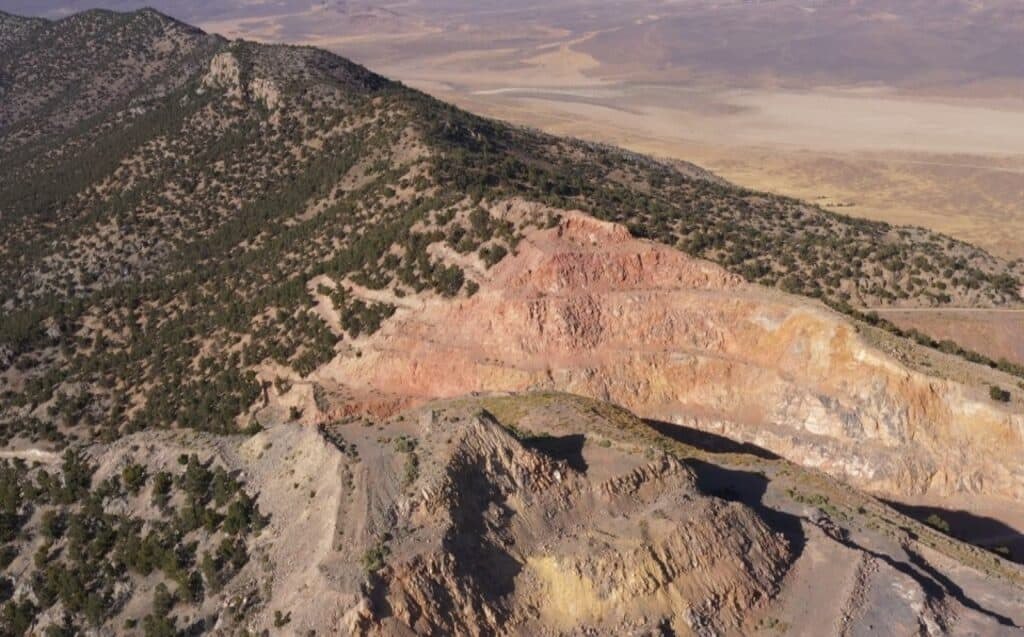
CopAur Minerals released a Preliminary Economic Assessment (PEA) and an updated Mineral Resource Estimate (MRE) for its 100%-owned Kinsley Mountain gold project in Nevada. The PEA outlines a 4‑year life-of-mine (LOM) open‑pit, heap‑leach operation averaging 30,514 ounces of gold per year at an all‑in sustaining cost (AISC) of US$1,861/oz. Using a base case gold price of US$3,200/oz, the project yields a post‑tax NPV5% of US$34.96 million, an IRR of 19.7%, and a 2.51‑year payback period. At a consensus US$4,000/oz and spot US$4,500/oz, NPV5% rises to US$104.38 million and US$147.26 million, respectively. Pre‑production capital is pegged at US$81.8 million, with total LOM capital of US$117.38 million, including US$33.1 million for pre‑stripping.
The updated MRE shows a 52% increase to 742,000 Indicated ounces (average grade 1.11 g/t Au) and 69,000 Inferred ounces (1.98 g/t Au). Importantly, 384,000 Indicated ounces sit in the high‑grade Secret Canyon zone at 5.32 g/t, offering a higher‑margin underground potential. The resource update includes 20,258 meters of drilling in 59 holes since the previous estimate.
The PEA and MRE update deliver several material elements, but the market is likely to view them with caution given the project’s small scale and elevated funding requirements.
- Valuation gap vs. market cap: At the base case, NPV5% (US$34.96M) is roughly 2.5× the current market cap, suggesting the stock is undervalued. At spot gold (US$4,500), that multiple rises to over 10×. However, the company will need to raise US$81.8 million upfront – a sum almost 4× its market capitalization. Dilution risk is therefore extremely high, and the market may ascribe only a fraction of the project’s NPV until a credible funding and development plan emerges.
- Comparative resource shift: The prior resource (418 koz Indicated at 2.63 g/t) was high‑grade, but the new estimate shows much lower overall grade (1.11 g/t). The resource grew substantially, but the average grade decline suggests the addition is primarily lower‑grade oxide material suitable for heap leaching. The presence of the Secret Canyon high‑grade zone adds upside, but the PEA focuses on the oxide pit; Secret Canyon’s economic contribution is not yet quantified.
- Project metrics: An AISC of US$1,861/oz leaves a healthy margin even at US$3,200 gold, but the 4‑year mine life is short, making this a relatively small, niche operation. Such a short life limits the premium investors will pay and increases sensitivity to construction delays or gold‑price dips.
- Catalyst delivery: The PEA had been flagged since early 2026, so the fact of its release is expected. What is new is the specific economic parameters, which are positive relative to the company’s size but not a “game changer.” The resource increase also reinforces the exploration potential, but the market already knew a sizeable resource was there.
- Relative to analyst expectations: Emerging Growth Research initiated coverage with a C$0.31 target (85% upside) based on a peer multiple and pre‑PEA resources. The PEA roughly supports that valuation if gold remains elevated, but the capital‑intensity and short mine life may cause analysts to trim that target.
Overall, the release contains genuinely new, substantive numbers that move the needle (positive, material), but the market will immediately weigh the extreme funding gap against the NPV. Thus, Material – Positive.
CopAur Minerals Inc. is a Nevada‑focused gold developer listed on the TSX‑V (CPAU) and OTCQX (COPAF). Its flagship Kinsley Mountain Gold Project is a 100%‑owned, past‑producing (1995‑1999, ~138 koz Au) oxide gold asset in Elko County. Historical production was halted due to operator bankruptcy, not resource depletion. CopAur also holds the Troy Canyon exploration property in Nye County (historic Locke Mine) and an equity stake (~15%) in Omega Pacific Resources, which owns the Williams Property in BC. The company is led by CEO Andrew Neale and Chairman Conrad Swanson, with an experienced technical team.