Pirate Gold Expands Moby Dick Copper-Gold Discovery; Intersects Porphyry Within a 2.7km Magnetite Corridor
Pirate’s Moby Dick deposit expands in width while grades fall 86% and eastern holes return barren results.
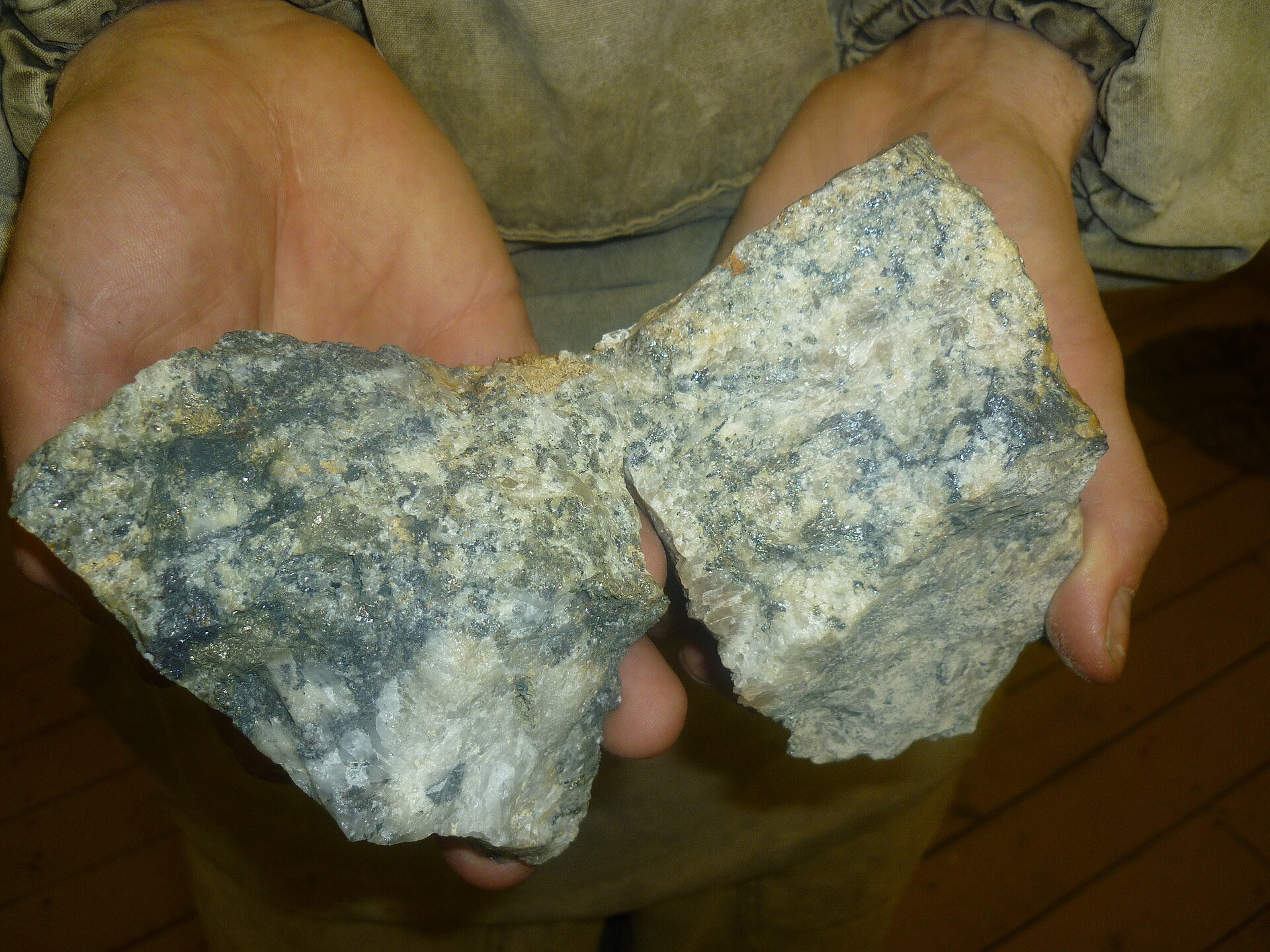
Pirate Gold Corp. (YARR) has released assay results from four drill holes at the Moby Dick copper-gold target within the Crippleback Intrusive Suite at the Treasure Island Project in Newfoundland. The release also includes data on three holes that returned no significant results, two holes that were abandoned before reaching bedrock, visual mineralization logs for twenty pending holes, and operational updates regarding barge and MobileMT activities.
Key drill intercepts include:
- PGC-26-123: 0.23% CuEq (0.11% Cu, 0.10 g/t Au, 1.07 g/t Ag, 7.83 g/t Mo) over 261.0 m from 32.0 m; incl. 0.34% CuEq over 57.0 m, incl. 0.51% CuEq (0.18% Cu, 0.28 g/t Au) over 20.0 m, incl. 0.38% CuEq over 13.6 m. Separate deeper zones: 0.23% CuEq over 9.0 m, 0.20% over 12.0 m, 0.40% CuEq over 17.0 m, 0.29% over 5.6 m, 0.16% over 5.0 m.
- PGC-26-127: 0.15% CuEq (0.02% Cu, 0.10 g/t Au, 9.40 g/t Mo) over 286.0 m from 20.0 m; incl. 0.40% CuEq (0.05% Cu, 0.28 g/t Au) over 19.3 m; incl. 0.32% over 18.6 m; plus 0.15% CuEq over 162.1 m from 414.9 m; plus 0.26% over 17.7 m and 0.11% over 10.0 m.
- PGC-26-120 (Moby's Porphyry): approx. 75 m wide porphyritic granodiorite dyke from 235.7–310.2 m with "strong potassic alteration up to 150 m external to the dyke"; 0.19% CuEq (0.10% Cu, 0.07 g/t Au, 16.34 g/t Mo) over 137.0 m, incl. 0.20% over 37.0 m, incl. 0.23% over 61.6 m, incl. 0.36% CuEq (0.19% Cu, 0.13 g/t Au) over 20.0 m; separate 0.12% CuEq over 10.0 m carrying 49.23 g/t Mo.
- PGC-26-128A: eight short intervals totalling ~156 m, each 0.08–0.25% CuEq, mostly moly-driven (e.g. 22.9 m @ 0.11% CuEq on 0.02% Cu and 94.31 g/t Mo).
- PGC-26-130, PGC-26-131, PGC-26-134: no significant results.
- PGC-26-126 (14.5 m) and PGC-26-129 (23 m): terminated before bedrock.
Interpretive analysis identified a 2,700 m "magnetite corridor" from first-derivative airborne magnetics, which is interpreted to control the porphyry and copper-gold fluids. The company claims "over 5 kilometres" of mineralization based on logged, though not yet assayed, sulphide. Visual logs indicate that 19 of the 20 pending holes contain chalcopyrite or molybdenite. Additionally, four barge holes have been completed on Crippleback Lake, with MobileMT deliverables expected in mid-November 2026.
The release also reiterates results from previous holes PGC-26-068 and PGC-26-118, dated June and September, to provide context within the body copy.
Pirate Gold Corp. (YARR) is a pre-resource explorer with no established resource, preliminary economic assessment, or metallurgical data. The company holds a market capitalization of approximately C$68 million against a book value per share of C$0.03 and total equity of C$17.6 million. At this stage of development, scale is typically priced before confidence, meaning a significant step-change in system size from a first hole is generally viewed as a catalyst for valuation adjustment.
The market’s expectation anchor was set by the PGC-26-068 intercept published on 17 June 2026, which reported 180.8 meters at 0.54% CuEq, including 49.4 meters at 1.48% CuEq. This intercept established the Moby Dick discovery narrative, prompting a single-day stock move from C$0.20 to C$0.26 (+30%) and a three-week trading range at C$0.24–0.27. Since the June high of C$0.27, the stock has declined to C$0.12, a 52-week low. This represents a 68% drop from the C$0.38 high in February and a 44% decline from the C$0.215 flow-through price paid three weeks ago, indicating the market had already reduced its valuation of the narrative prior to this release.
The latest results present a negative delta relative to the anchor, particularly regarding grade. The current intercept shows a 57% decrease in grade and an 86% decrease in high-grade core thickness compared to the June data. While the interval is 44% longer, the additional length averages 0.23% CuEq, which does not add significant value in a bulk-tonnage system context. Compared to the most recent Moby Dick release, PGC-26-118 on 2 September, the grade is flat at 0.23% versus 0.24%, and the high-grade core has halved. Additionally, three holes drilled in the same corridor returned no results. The longest interval in the current release, PGC-26-127, covers 286 meters plus 162 meters but contains only 0.02–0.09% copper, which does not support an upgrade to the copper thesis.
The systematic multi-hole read across roughly 2 kilometers of strike establishes that the Moby Dick envelope carries copper at 0.02–0.11% and gold at 0.03–0.13 g/t. This defines a large low-grade halo rather than a grade discovery, lowering the expected grade for the 19 pending holes that serve as the primary catalyst for the equity. The eastward extension, promoted for five months as proof of a 2-kilometer system, returned three barren holes and one weak molybdenum hole. The high-grade center that previously made the June story investable has shrunk by 86% in grade-thickness.
Offsetting positives include the identification of the first porphyritic granodiorite dyke with a potassic halo and a coherent 2.7-kilometer magnetite corridor. While this geological vector improves the odds of locating a grade center, it does not constitute immediate value. The current result is neither in-line nor better.
Pirate Gold Corp. (TSXV: YARR; OTCQB: YARRF) is a Newfoundland-focused explorer with no revenue, no mineral resource, no reserve and no economic study.
The company’s Treasure Island Project is 100%-owned and covers approximately 78,600 hectares, offering more than 90 km of strike along the Valentine Lake Fault Zone in central Newfoundland. The property is located roughly 15 minutes from Grand Falls-Windsor with year-round road access.
The project features two geological pillars. Moosehead is an orogenic gold system in micaceous sandstones and mafic volcanics, characterized by narrow, high-grade stylolitic and brecciated veins with visible gold, arsenopyrite and boulangerite. These features have been traced over about 1,500 m of strike and to about 200 m depth across the Eastern and Western trends, Rib vein and Caribou fault. Crippleback is the copper-gold porphyry/high-sulphidation epithermal system, hosting Moby Dick, a 3,100–4,000 m long, 850 m wide advanced argillic alteration envelope with a 2,700 m interpreted magnetite corridor, plus the drill-permitted Clipper Brook target 12 km east.
Other assets include Fleur de Lys (district-scale gold) and Grey River.
Management includes Denis Laviolette (Executive Chairman and CEO, founder of New Found Gold), Tim Froude (President, former COO of New Found Gold), and Greg Matheson, P.Geo. (VP Exploration and QP). Eric Sprott holds approximately 22%.
Prior-period context, not disclosed in today's release, includes FY2026 (year to 30 June 2026) net loss C$19.56 million on exploration and evaluation spend of C$12.99 million (up from C$2.70 million) and share-based compensation of C$6.68 million from 60,055,000 options granted. The company reported an operating cash outflow of C$15.80 million, cash of C$13.20 million, working capital of C$12.52 million, and total equity of C$17.59 million. There were 507.1 million shares outstanding and a going-concern flag in the MD&A. The October 2026 flow-through placement added 61.3 million shares for C$13.61 million gross at C$0.215 and C$0.2475. Pro forma basic shares are therefore roughly 568 million, giving a market capitalisation near C$68 million at C$0.12 and an enterprise value around C$50 million.