Thunder Mountain Gold Intersects New Carbonate Replacement Deposit Silver-Zinc Mineralization and Confirms Two Porphyry Centers at South Mountain
Thunder Mountain reports 2.07% zinc in a new CRD zone below cut-off, while its porphyry claims remain unassayed.
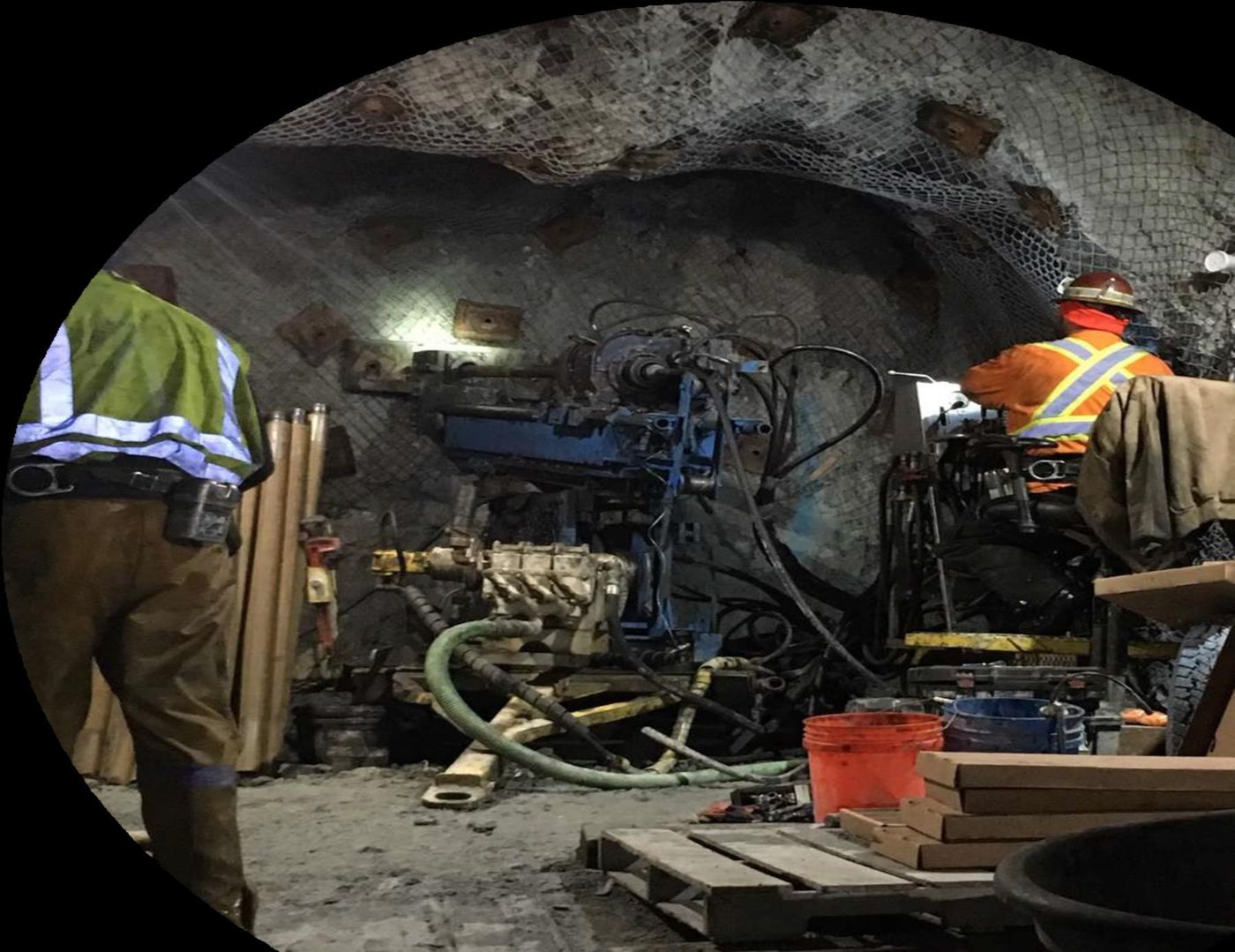
Thunder Mountain Gold, Inc. (THM) has completed 14 core holes totaling 2,670 meters (8,760 feet) at its Kentucky Ridge project. Assays have been received for nine of these holes, while results for five holes, including all three Birthday holes, remain pending. The drilling program targeted ten holes at CRD massive sulphide deposits and four at intrusive-hosted or porphyry targets.
At Kentucky Ridge, a new CRD step-out approximately 250 meters northwest of and on strike from the known ~800 meter CRD zone, hole SM26-062 intersected 22.28 meters at 2.07% zinc and 9.00 grams per tonne silver, including 14.81 meters at 2.98% zinc and 11.9 grams per tonne silver. This hole is positioned about 25 meters down-plunge of a surface gossan that channel-sampled 7.6 meters at 125 grams per tonne silver, 1.2% lead, and 1.7% zinc. Assays for the underlying hole SM26-063 are pending.
In the DMEA Zone, a known CRD up-dip extension, hole SM26-060 returned 2.38 meters at 29.2 grams per tonne silver and 0.455 grams per tonne gold. Hole SM26-061 intersected two anomalous silver zones, measuring 2.28 meters at 6.03 grams per tonne silver and 3.21 meters at 8.46 grams per tonne silver. Southeast of the known CRD zone, holes SM26-058 and SM26-059 intersected altered Laxey Marble and a felsic dike with elevated silver, returning 6.74 meters at 4.90 grams per tonne silver and 0.94 meters at 6.32 grams per tonne silver.
At the Bay State CRD step-out target, hole SM26-064 hit hedenbergite skarn alteration and carbonate dissolution textures, with assays pending. At the Gold Breccia porphyry/breccia target, hole SM26-054 returned 55.17 meters from surface at 0.112 grams per tonne gold, including 3.0 meters at 0.657 grams per tonne gold. The underlying granodiorite shows crowded porphyry textures, sericite, secondary biotite, and calc-silicates, with sulphides dominantly disseminated and as 1 mm-2 cm pyrrhotite veinlets.
At the Birthday new porphyry target, holes SM26-065 and SM26-067 cut five quartz-feldspar/feldspar-dacite porphyry phases with intense pervasive sericite overprinted by biotite-pyrite ± quartz stockwork/hydrofracture veinlets. These holes contained disseminated pyrite at 2-5%, trace chalcopyrite, and one 6.5 cm massive sulphide vein consisting of approximately 50% pyrite and 15% chalcopyrite. Hole SM26-066 was abandoned in basalt cover. All Birthday assays are pending.
Quality assurance and control were conducted by MSA Labs in Elko, Nevada. Gold was analyzed by 30 g fire assay with AA finish (FAS-111), and multi-element analysis was performed by 0.25 g four-acid digestion using ICP-MS (IMS-230). The program included blind certified reference materials, duplicates, and blanks.
In other corporate news, 400,000 options were granted to new director Ron Clayton at $0.75 to October 14, 2031.
Thunder Mountain Gold, Inc. (THM) is a pre-revenue explorer and developer with an existing but small resource base, comprising 223,000 short tons Measured and Indicated plus 959,000 short tons Inferred as of 2023. The company has invested roughly US$25 million since 2007 and has not yet produced a Preliminary Economic Assessment. With a market capitalization around C$103 million based on 93.5 million shares outstanding as of Q2-2026, the stock count excludes pending placements of approximately 9.1 million units and 1.58 million debt-settlement shares. As a non-producer, the company’s valuation remains sensitive to drill results that can alter the scale, grade, or probability of the project.
Recent geological interpretations indicate an expansion of the district footprint, identifying a new zone approximately 250 meters away, along with two intrusive centers exhibiting porphyry-style alteration. However, these new anomalies remain untested, and the core resource parameters have not changed. The contained metal, cut-off-grade economics, metallurgy, Preliminary Economic Assessment timeline, and cash position remain unchanged. No economic-grade tonnes were added in the latest reporting; the best assayed intercept from the new zone falls below the deposit’s own Net Smelter Return cut-off on disclosed metals. Additionally, the single assayed porphyry hole recorded grades an order of magnitude below the porphyry-Au band and below the legacy RC grades used to promote the target in June 2026.
The property’s historical performance provides a benchmark for assay results. The best previously reported intercepts came from the September 17, 2026 DMEA holes: SM26-055 returned 22.47 meters at 86 g/t Ag, 0.36% Cu, and 0.52% Zn, including 10.15 meters at 141 g/t Ag, while SM26-057 returned 2.11 meters at 451 g/t Ag, 1.51 g/t Au, 4.44% Pb, and 1.64% Zn, plus 13.63 meters at 117 g/t Ag. In comparison, the best silver result in the current release, SM26-062, yielded approximately 200 g·m Ag, roughly one-tenth of the historical silver performance, though it showed stronger zinc metreage at approximately 46 %Zn·m compared to the historical 12 %Zn·m.
Market reaction to previous data has been muted. The stock closed at $1.30 on the day of the September 17 release and has since faded to the $1.10–$1.20 range, representing a decline of about 15%. The August 11, 2026 peak of $1.51 preceded any 2026 assay release and appears driven by funding and near-term production narratives rather than drilling results. Shares have risen sharply year-on-year, moving from $0.50 on November 6, 2025, to $1.10 currently, but remain 27% below the August 2026 high. The tape has drifted from $1.25 on October 5 to $1.10 on October 21. The current release presents a headline that is scale-positive but numbers that are grade-negative, suggesting a flat to modestly negative reception with the possibility of a short-lived pop on the "new CRD zone" and "two porphyry centers," but not a repricing of 15% or more.
Thunder Mountain Gold, Inc. (TSX-V: THM; OTCQB: THMG), a pre-revenue junior explorer and developer of base and precious metals in the western United States, was founded in 1935 and is based in Boise, Idaho. The company reported a net loss of US$2,829,759 for fiscal year 2025, a net loss of US$1,012,310 for the second quarter of 2026, and a net loss of US$1,603,068 for the first half of 2026.
The company’s flagship asset is the South Mountain project, a polymetallic Zn-Ag-Au-Cu-Pb carbonate replacement/massive sulphide and skarn system located in the Laxey Marble in Owyhee County, Idaho, approximately 70 miles southwest of Boise. The deposit includes associated porphyry centres and has been mined since the 1860s. During the Anaconda era, more than 8,000 feet of drifts, shafts, raises, and stopes were developed, with roughly 4,000 feet rehabilitated to MSHA standards. Since 2007, the company has invested approximately US$25 million in the property.
An NI 43-101 / S-K 1301 resource estimate effective December 15/31, 2023, prepared by qualified persons Choquette, Schwering, and Brown, utilized a US$97.50/t NSR cut-off. The estimate includes Measured resources of 69,000 tonnes and Indicated resources of 154,000 tonnes, totaling 223,000 tonnes of Measured and Indicated material grading 9.02% Zn, 4.27 oz/t Ag, 0.64% Cu, 0.94% Pb, and 0.059 oz/t Au. Inferred resources total 959,000 tonnes at 7.56% Zn, 5.67 oz/t Ag, 0.80% Cu, 1.06% Pb, and 0.037 oz/t Au. The combined resource contains roughly 6.4 million ounces of silver and approximately 92,000 tonnes of contained zinc.
In 2026, Thunder Mountain Gold expanded its land package by 13,061 acres, or approximately 20 square miles. This expansion included the purchase of 113 acres adjoining the mine and Gold Breccia, the staking of 423 BLM lode claims covering approximately 8,200 acres, a 1,073-acre private lease, and a 20-year Idaho state lease over approximately 3,675 acres commencing March 1, 2026.
The company also holds the Trout Creek project in Lander County, Nevada, within the Battle Mountain district. This early-stage gold-copper property consists of 26 claims covering 520 acres on formerly Phelps Dodge ground. It is adjacent to i-80 Gold's Cove-McCoy project and south of Nevada Gold Mines' Phoenix complex. No assay results were featured in the current release for this asset.
Illustrative presentation economics, which are not derived from a Preliminary Economic Assessment in this release, outline a 10-year mine life with US$50-70 million in capital expenditures and operating costs of US$140-200/t. These projections suggest a 25% after-tax internal rate of return and a US$50 million net present value at a 5% discount rate. The model assumes a throughput of 450-750 tonnes per day, producing 23,000 tonnes of zinc and 2 million ounces of silver annually. A 10-year mine at that throughput implies processing roughly 2 million-plus tonnes of ore, which is about double the current 1.18 million short tons of resource.