Market One: Standard Uranium Returns to Davidson River
Standard Uranium’s Davidson River Return Reads Like a Rerun: Ambitious Plans, Modest Drilling.
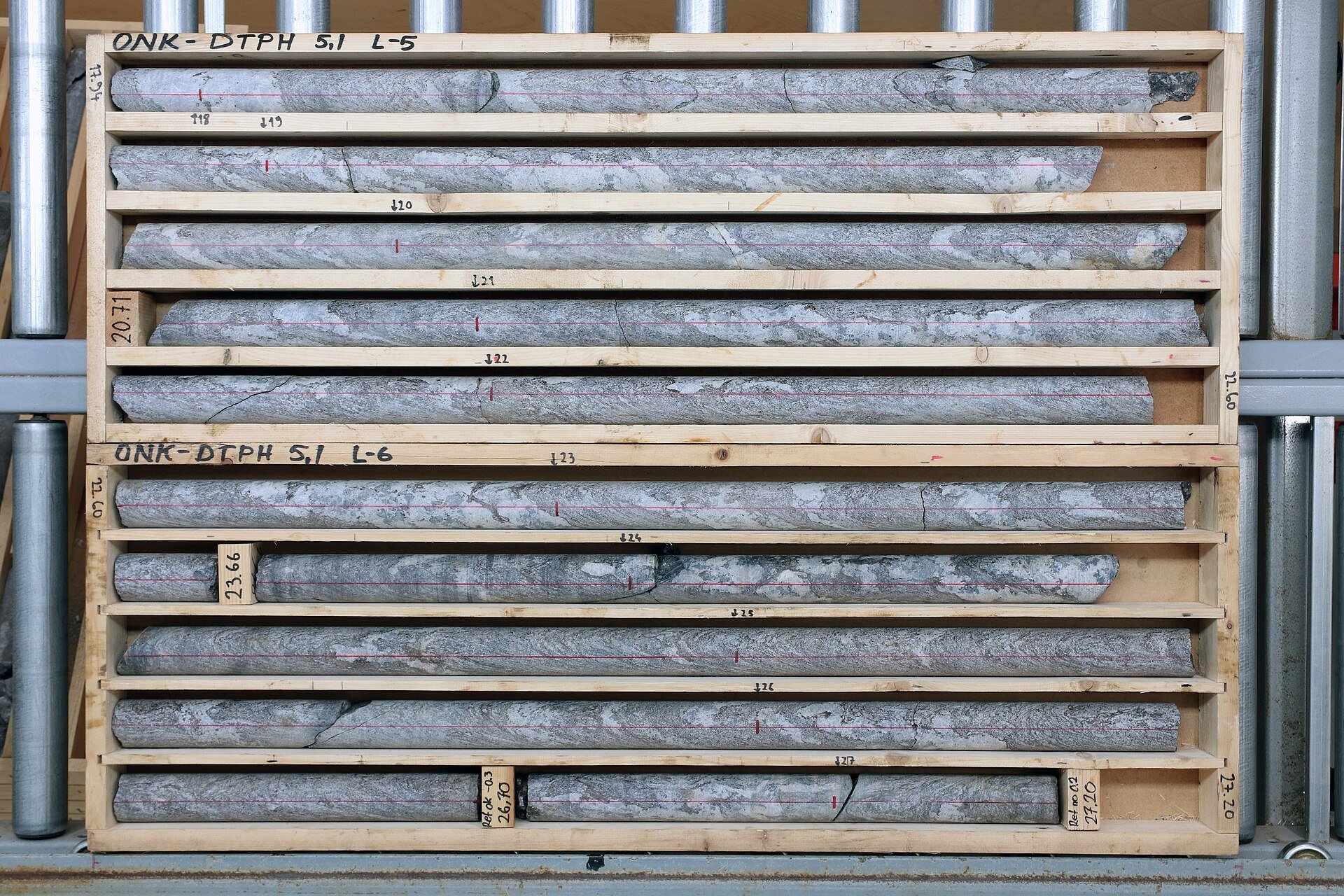
The most recent release on May 14, 2026, outlines Standard Uranium's 2026 exploration strategy, primarily the return to its flagship Davidson River project with advanced machine-learning targeting. This follows a closely timed sequence of announcements: confirmation of fully permitted, drill-ready targets at Davidson River on May 7, 2026, and a $900,000 listed issuer financing exemption (LIFE) offering priced at $0.10 per unit on May 11, 2026. The company also highlighted two partner-funded drilling programs advancing at Corvo and Rocas. The news stream shows the company activating its project generator model, with inaugural drilling results from Rocas (anomalous radioactivity) and Corvo (23m of composite radioactivity) feeding into the narrative of advancing the portfolio.
The May 14, 2026 news release is a summary reiteration of previously disclosed plans. The return to Davidson River, the key catalyst for the company, was already detailed on May 7, 2026. The subsequent financing on May 11, 2026, was necessary to fund this drill program. Therefore, the most recent release provides no new material information.
The historical progression reveals a persistent pattern: 1. Constant Capital Needs: Over the past year, the company has conducted a relentless series of financings. These include a non-brokered private placement closed in June 2025 (raising ~$1M at $0.06/$0.075 per unit), a LIFE offering in October 2025 (25M FT units at $0.10), multiple tranches of a private placement in late 2025 totaling $1.8M+, a final tranche in October 2025 for $1.5M, culminating in the current May 2026 LIFE offering at $0.10. The share price has been consistently pressured by these dilutive events, oscillating between $0.09 and $0.12 for most of 2026 despite a steady stream of "positive" exploration news. 2. Drill Results Lack Discovery: The partner-funded programs at Corvo and Rocas, while generating headlines about "anomalous radioactivity," have not delivered a market-moving discovery. At Corvo, 23m of composite radioactivity >300 cps in 10 holes over 2,457m is a first-pass validation but does not constitute an economic intercept. The high-grade 8.10% U3O8 surface sample at Corvo's Manhattan showing remains untested at depth. Similarly, Rocas' 1.5m of composite radioactivity in 4 holes is a technical success but a market non-event. 3. Davidson River: The Perpetual "Next Big Thing": The company has been building towards this Davidson River drill program for over three years. While the integration of Fleet Space's multiphysics data is technically sound, the market has already priced in the potential of these targets. The real materiality will only arrive with assay results from the 8,000-10,000m drill program, which has not yet commenced. The planned mobilization for May 31, 2026, was also already announced.
The consistent share issuance at depressed prices to fund incremental exploration steps, without a genuine discovery, is a capital-destructive cycle. The most recent news changes nothing about this fundamental equation.
Standard Uranium is an Athabasca Basin uranium explorer operating a project generator model. The flagship asset is the 30,737-hectare Davidson River Project in the southwest Athabasca Basin, located on structural trends analogous to NexGen's Arrow and Paladin's Triple R deposits. The project has seen 16,561m of historical drilling across 39 holes. The upcoming 2026 drill program is targeting graphitic structures within the Warrior, Bronco, and Thunderbird corridors. The company also holds a portfolio of eastern Athabasca Basin projects, notably Corvo (under option to Aventis Energy) and Rocas (under option to Collective Metals), as well as the Sun Dog project near Uranium City. The presentation highlights a property portfolio of over 233,000 acres. A crucial detail from the presentation is that the company's reported "Resources" (e.g., 102.4 M lbs Indicated) appear to be references to nearby deposits (Arrow/Triple R) and not a resource estimate on their own property, a highly promotional and misleading practice in my view.