Grounded Lithium Releases Kindersley Lithium Project Pre-Feasibility Study Results Mineral Reserves Booked on the KLP Supported By Rigorous Technical De-risking
Grounded’s KLP project books first reserves with an npv of us$90m and irr of 10.8%.
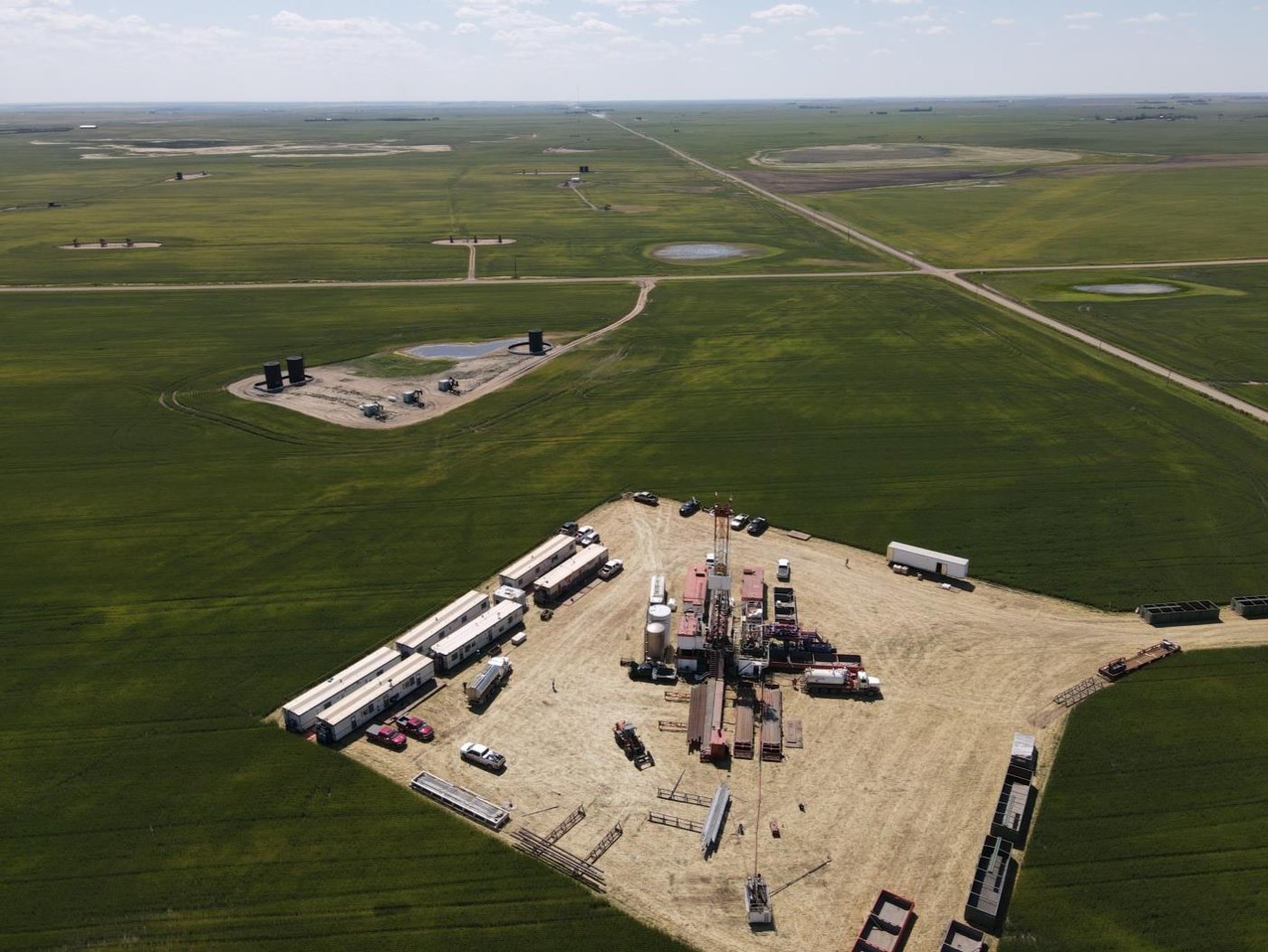
Grounded Lithium Corp. (GRD) released the Pre-Feasibility Study ("PFS") for the Kindersley Lithium Project (KLP) on Thursday, authored by Stantec Consulting Ltd. The company stated this marks its first-ever declaration of Mineral Reserves and, according to Grounded Lithium, the first NI 43-101 lithium mineral reserves publicly declared in Saskatchewan.
The reserves are scoped to only 36 sections, representing 13% of the total KLP land area, which the company described as "the first of several potential phases." Headline numbers from the study include 82,499 tonnes of LCE Mineral Reserves and an annual average production of 3,200 t/yr LCE. Financial metrics include an after-tax IRR of 10.8%, an NPV of C$125.0M (US$90.0M), pre-production capital of C$603.1M (US$434M), average annual opex of C$27.2M, and unit operating costs of C$8,581 (US$6,179) per tonne LCE.
The cost estimate is classified as a Class 4 estimate, carrying a tolerance of roughly −15% to −30% on the low side and +20% to +50% on the high side. The selected technology is an adsorption-based Direct Lithium Extraction ("DLE") process. Phase 1 envisions 45 brine production wells (70.0–81.0 mg/L Li in the Duperow), approximately 46.6 km of pipelines, 8 injection wells, and 3 disposal wells.
The PFS represents a sharp reduction in scale compared to the 2023 PEA, dropping from approximately 10,000 t/yr LCE (equivalent to 11,000 t/yr lithium hydroxide monohydrate) to the current 3,200 t/yr LCE. Management described the outcome as "technical de-risking" and "independent third-party validation," positioning the study as a "base case" with a "clear path to enhance project economics" via further infill drilling to upgrade Inferred resources. A full NI 43-101 Technical Report is to be filed on SEDAR+ within 45 days.
Grounded Lithium Corp. (GRD) released a Preliminary Feasibility Study (PFS) that presents a stark contrast to the economic projections the company has promoted for years. Historical releases, including the Q3 2025 report, the 2025 year-end update, and multiple operational updates, anchored the investment case to the 2023 Preliminary Economic Assessment (PEA). That earlier study projected a Phase 1 after-tax Net Present Value (NPV8) of US$1.0 billion and an after-tax Internal Rate of Return (IRR) of 48.5%. The new PFS delivers an NPV of US$90.0 million and an IRR of 10.8%, representing roughly a 91% reduction in NPV and a two-thirds cut in the production profile.
While the study is limited to 13% of the land under the "first phase," this scope caveat does not mitigate the significant deterioration in capital efficiency. The PFS is dramatically more capital-intensive per unit of capacity than the PEA suggested. The new plan requires US$434 million of capital expenditure (capex) for 3,200 tonnes per year (t/yr) of lithium carbonate equivalent (LCE), equating to approximately US$135,000 per annual tonne of LCE. By comparison, the PEA’s US$335 million for 11,000 t/yr of lithium hydroxide material (LHM) worked out to roughly US$30,000 per annual tonne, indicating a 4–5x deterioration in cost efficiency.
An after-tax IRR of 10.8% sits at or below any reasonable cost of capital for a pre-revenue junior company facing this level of construction and permitting risk. The NPV of C$125 million is a small fraction of the pre-production capex of C$603 million, implying a very long payback period and thin margin for error. Additionally, the company acknowledges that reinjected brine will lower lithium concentrations over the life of the mine, adding further dilution.
The study does include positive elements, such as the establishment of first reserves, third-party validation by Stantec, a de-risked flowsheet, and theoretical upside from converting approximately 3.2 million tonnes (Mt) of Inferred resources to Indicated. However, these factors represent optionality rather than near-term value and do not offset the collapse in base-case economics.
This development follows a fragile backdrop set by preceding news flow, which included a Q2 2026 loss of $132,943, a working-capital deficit of $114,043, going-concern language, and oil and gas production of only approximately 123 barrels per day (bpd). The weak PFS compounds the difficulty of raising the capital required to move forward.
Grounded Lithium Corp. (TSXV: GRD, OTCQB: GRDAF) is a Calgary-based pre-revenue developer whose flagship asset is the Kindersley Lithium Project (KLP) in southwestern Saskatchewan. The project targets lithium-enriched brines in the Duperow formation, which the company describes as shallow and hydrocarbon-free. The KLP landholding exceeds approximately 77,600 hectares.
The company cites a resource base of approximately 1.0 million tonnes of combined Measured and Indicated lithium carbonate equivalent (LCE) plus approximately 3.2 million tonnes of Inferred LCE. Its development approach utilizes an adsorption-based direct lithium extraction (DLE) method with a modular plant design concept, which is positioned as lower-risk and repeatable.
Since late 2025, the company has diversified into shallow oil and gas operations near Lloydminster and Marsden to generate cash flow to help fund lithium work. This strategy has produced only minor revenue so far, with heavy oil sales totaling approximately $16,268 in the first half of 2026 from production of approximately 123 barrels per day.