Granada Gold Mine Reviews the Potential of 1 Gram per Tonne Gold in an Open Pit Resource at Minesite
None
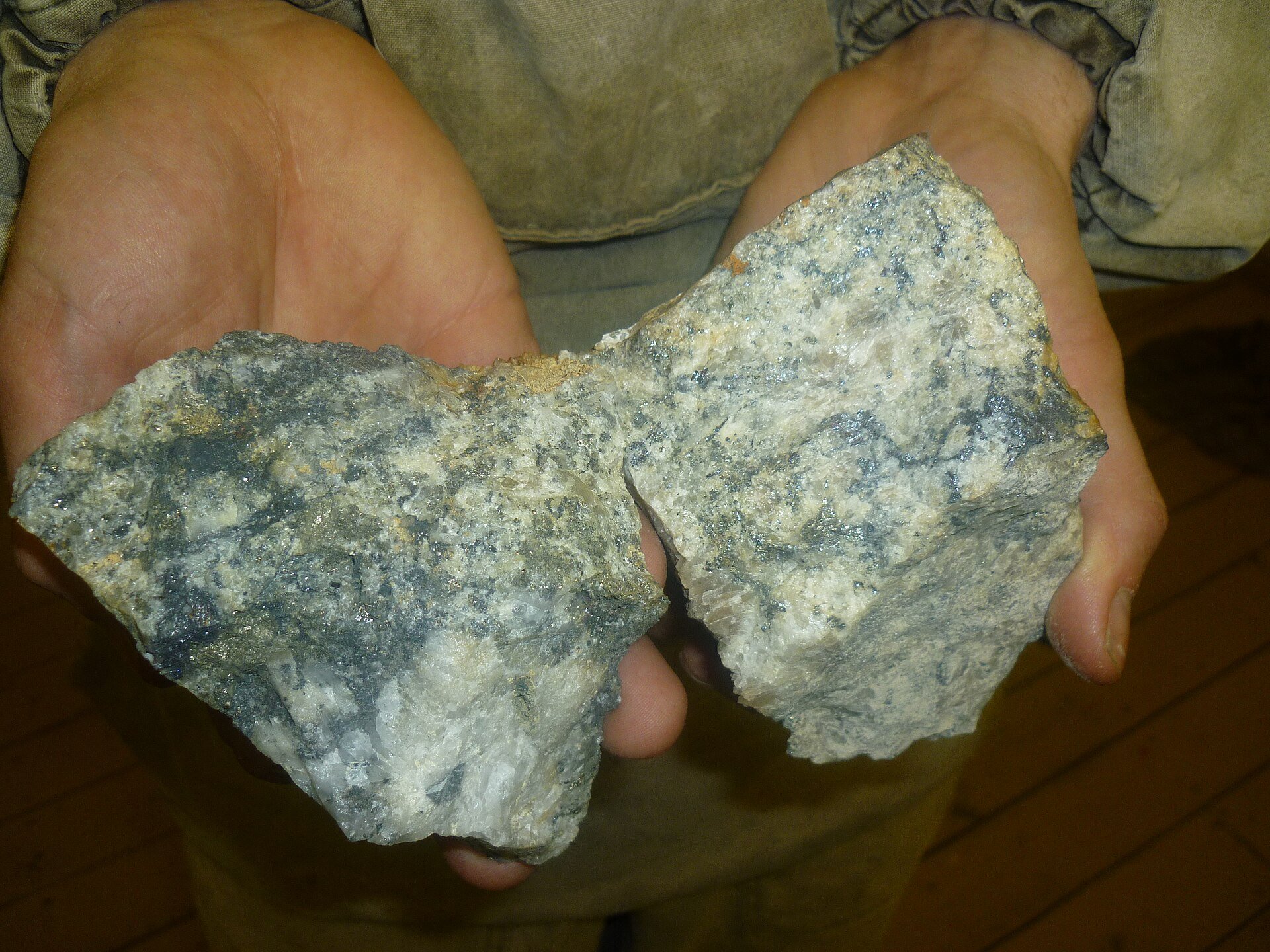
The most recent news release from October 15, 2025, states that Granada Gold Mine Inc. is reviewing the potential for an open pit resource at its Granada Minesite using a 1 gram per tonne (g/t) gold cut-off. This strategic review is prompted by the current increase in gold prices. The company highlights that its existing resource is fully permitted and "shovel ready," with 80 percent of the 5.5-kilometer mineralized structure still open for exploration, suggesting potential for significant resource expansion. The news references the updated NI 43-101 Mineral Resource Estimate from June 23, 2022, which reported 543,000 ounces of Measured & Indicated gold at an average grade of 2.05 g/t (using a 0.55 g/t Au pit-constrained cut-off) and 456,000 ounces of Inferred gold at 4.71 g/t. It also briefly mentions a historic (2017) estimate that, while not current, showed a larger resource at a lower cut-off. The ongoing exploration program of 120,000m has seen 20,000m completed, but drilling is paused to evaluate data and await improved market conditions.
This announcement is directionally positive but routine in nature. The decision to re-evaluate the open pit resource at a higher cut-off grade (1 g/t Au compared to the current 0.55 g/t Au for pit-constrained resources) due to rising gold prices is a logical step for any exploration company. It aims to demonstrate a potentially more robust and economically viable open pit scenario, which could lead to a higher average grade for the open-pit portion of the resource, albeit potentially with reduced tonnage if not accompanied by new discoveries. The company consistently emphasizes its "fully permitted" and "shovel ready" status, which is a valuable asset, especially in Quebec where permitting can be lengthy.
However, the material impact is limited as this is merely a "review" of potential, not a new resource estimate or a definitive economic study. It's an internal assessment of what could be. The company's recent attempt to secure a custom milling agreement with Lafleur Minerals fell through (announced June 25, 2025), which was a material negative development, pushing back any near-term production plans. While the CEO states they are "actively engaged in discussions with several parties regarding processing alternatives," the lack of a concrete processing solution remains a significant hurdle to realizing the value of their "shovel ready" resource.
Financially, the company is in a precarious position. As of March 31, 2025, Granada Gold Mine had only $8,976 in cash and a working capital deficiency of over $13 million. Their cash burn rate has also increased significantly. While board appointments (Daniel Barrette, Heidi Gutte, Christopher Ecclestone, Maya Basa) signal an intent to strengthen corporate governance, finance capabilities, and strategic direction (including critical metals like rubidium), these are long-term initiatives that do not address the immediate capital needs. The company needs substantial capital injection or a clear path to revenue generation to fund ongoing operations and advance the project meaningfully. Without securing significant financing or a binding processing agreement, the "review" of resource potential, while positive on paper, has limited immediate material impact on the company's financial stability or stock valuation.
Granada Gold Mine Inc. (TSXV: GGM) is a Canadian gold exploration and development company. Its flagship asset is the 100%-owned Granada gold property, located near Rouyn-Noranda, Quebec, adjacent to the prolific Cadillac Break shear zone. The property covers 14.73 square kilometers, consisting of mining leases and claims.
The Granada project has a history of underground gold production in the 1930s, yielding over 50,000 ounces at an average grade of 10 g/t gold. More recent bulk samples have also shown high grades (e.g., 5.17 g/t and 3.46 g/t).
Mineral Resource Estimate (August 22, 2022, NI 43-101 compliant): * Measured & Indicated (M&I): 8.22 million tonnes at 2.05 g/t Au for 543,000 ounces of gold. * Pit-constrained cut-off grade: 0.55 g/t Au * Underground cut-off grade: 2.5 g/t Au * Inferred: 3.01 million tonnes at 4.71 g/t Au for 456,000 ounces of gold.
The company has identified up to 22 east-west trending mineralized structures over a 5.5-kilometer strike length, with only about 20% explored. A large deep drilling program of 120,000 meters was initiated, with 20,000m completed before being paused to evaluate data and await improved market conditions.
In addition to gold, the company has identified potential for low-grade alkaline and rare-earth elements (REEs), including Samarium, Gallium, and Rubidium, with extraction viability for rubidium demonstrated at over 90% in bench-scale tests using the Re-2Ox process. However, a previously announced inferred rubidium resource was retracted due to NI 43-101 non-compliance.
A key strategic advantage highlighted by the company is that the open pit resource is "fully permitted to go into production as a shipper for custom milling," making it "shovel ready." The company also sees value in reusing waste rock as aggregate, which could improve project economics.