Aclara and Vac Strengthen Mine-To-Magnet Collaboration During Visit to Aclara's Pilot Plant in Brazil
None
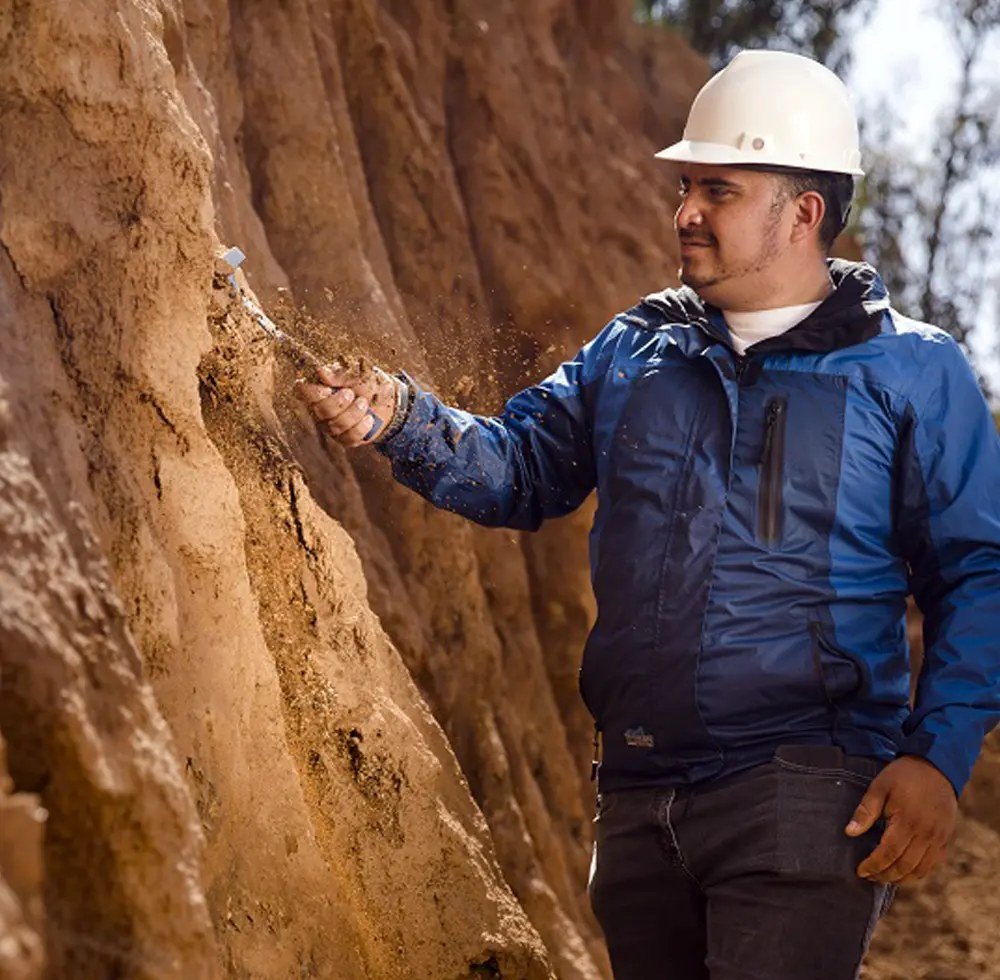
The most recent news, dated November 7, 2025, announces that Aclara hosted representatives from eVAC Magnetics LLC and Vacuumschmelze (VAC) at its Carina Project pilot plant facility in Brazil. This visit aimed to strengthen their collaboration in designing and implementing a fully integrated, ESG-focused rare earths supply chain for permanent magnets. During the visit, the pilot plant successfully produced approximately 150kg of high-purity mixed rare earth carbonates using Aclara's proprietary Circular Mineral Harvesting process.
Quotes from both Aclara's Executive Vice-president, Jose Palma, and eVAC Magnetics' Scott Pelhank emphasized the strategic alignment between Aclara's heavy rare earth supply by mid-2028 and VAC's expansion plans, including eVAC's Phase II upstream process extension to metallization (early 2027 in South Carolina) and Aclara's planned oxide separation facility in Louisiana. Both parties reiterated their commitment to establishing a Western Hemisphere mine-to-magnet supply chain with high environmental and social responsibility standards.
This news is a positive operational update that demonstrates tangible progress in Aclara's "mine-to-magnet" vertical integration strategy and its strategic partnership with VAC. The successful production of 150kg of high-purity mixed rare earth carbonates from the pilot plant validates Aclara's proprietary Circular Mineral Harvesting process and its ability to produce suitable feedstock for downstream processing.
However, the news is largely in line with previously announced expectations and collaborations. A Memorandum of Understanding (MoU) with VAC was established in 2024 for technical and commercial collaboration. Furthermore, Aclara announced its decision to build a US$277 million heavy rare earths separation facility in Louisiana on October 24, 2025, which would process feed from Carina. The pilot plant production is a necessary and positive step in validating the process for this larger strategy but does not introduce new information that materially changes the company's financial projections or strategic direction beyond what was already communicated.
Compared to the previous day's news (November 6, 2025), which announced robust Pre-Feasibility Study (PFS) results for the Carina Project with an after-tax NPV8 of US$1.1 billion and an IRR of 22%, the current news, while positive, does not introduce new economic data of similar magnitude. The PFS release was a "Material - Positive" event, establishing the economic viability of the flagship project. This latest news serves to de-risk the technical aspect and reinforce the downstream partnership, confirming that operations are progressing as planned.
Aclara Resources Inc. (TSX:ARA) is a rare earth elements company focused on developing a sustainable and geopolitically independent supply chain for heavy rare earths outside of Asia. The company's strategy involves a fully integrated "mine-to-magnet" approach.
Its flagship project is the Carina Project located in Goiás, Brazil. This project is focused on ionic clay deposits, which are recognized for their high content of heavy rare earth elements (HREEs) crucial for permanent magnets in electric vehicles and other advanced technologies. The company is developing its proprietary Circular Mineral Harvesting (CMH) technology for extraction, which is designed to be environmentally friendly: it avoids explosives, crushing, or milling; uses a closed-circuit process with over 95% water recirculation and 99% reagent recovery; generates no liquid residues or tailings dams; and allows for full revegetation of impacted areas.
Key aspects of Aclara's strategy include: * Penco Module (Chile): Another ionic clay rare earth mineral resource development project in the Biobío region of Chile, currently undergoing environmental permitting. * U.S. Separation Facility: Aclara plans to construct the first heavy rare earths separation facility in the United States (in Louisiana), expected to process mixed rare earth carbonates from its projects into high-purity individual rare earth oxides (Dysprosium, Terbium, Neodymium-Praseodymium, etc.). This facility is projected to cost US$277 million, with significant support from the State of Louisiana. * Alloy Production Joint Venture: A 50/50 joint venture with Chilean steelmaker CAP S.A. (Ree Alloys SpA) to convert separated rare earth oxides into metals and alloys for permanent magnets. * R&D and Innovation: Partnerships with Virginia Tech for a HREE separation pilot plant and Stanford University's Mineral-X for AI in exploration.
The Pre-Feasibility Study (PFS) for the Carina Project, released on November 6, 2025, indicates strong economics with an after-tax NPV8 of US$1.1 billion, an IRR of 22%, and average annual production of 4,265 tonnes REO over an 18-year mine life. Initial capital cost is estimated at US$680.5 million.
The company's properties are not explicitly stated to be royalty-free in the provided news, and therefore, this remains an unknown factor.