Perpetua Resources Partners with the Idaho National Laboratory to Advance Critical Mineral Pilot Plant
Perpetua Deepens Pentagon Ties With Idaho Lab Partnership on Antimony
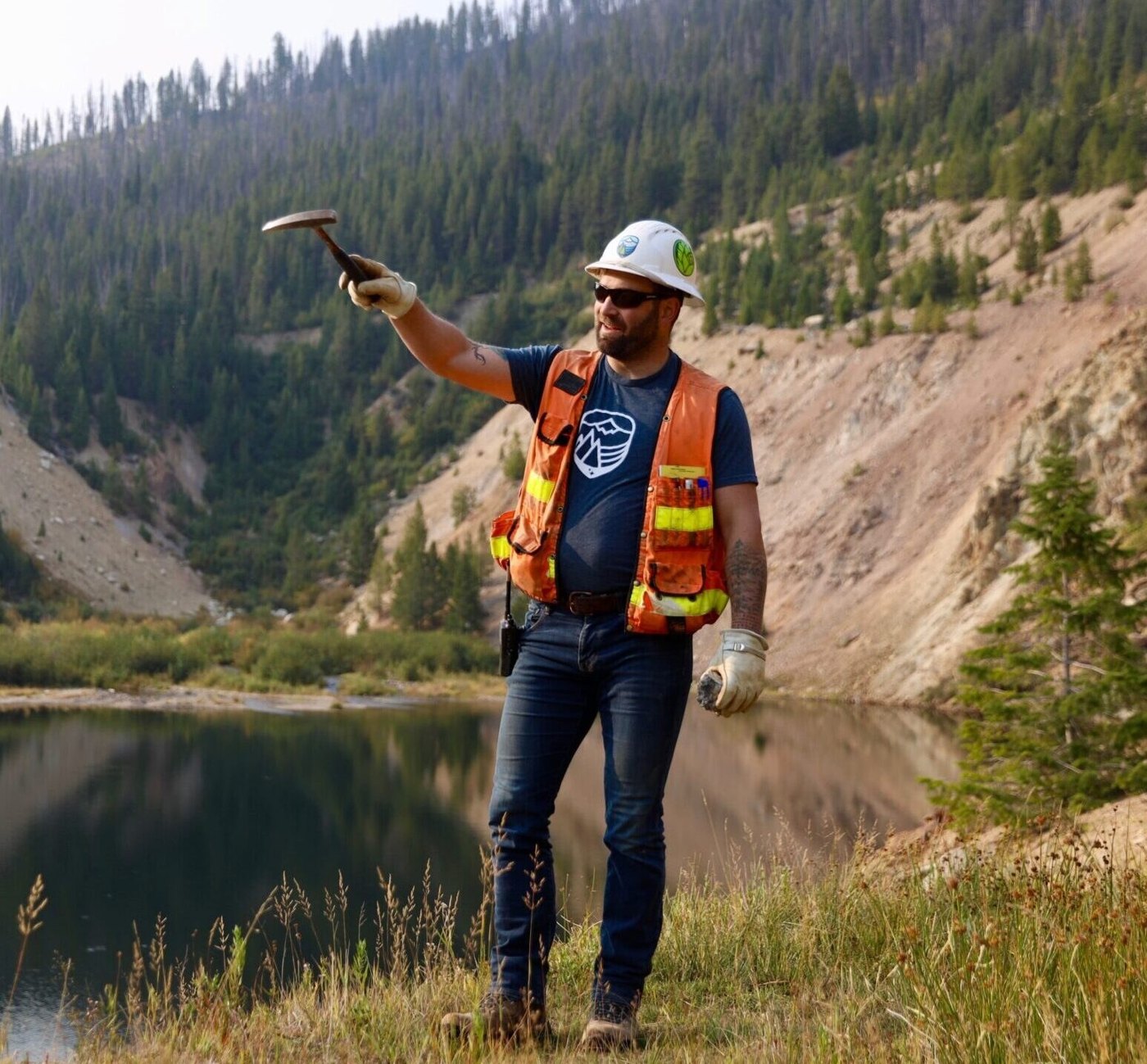
On December 9, 2025, Perpetua Resources announced a partnership with the Idaho National Laboratory (INL) to advance a critical mineral pilot plant. Under the agreement, INL will host, commission, and operate a modular pilot processing plant designed to recover critical minerals, specifically to demonstrate the feasibility of producing military-specification antimony trisulfide from Perpetua's Stibnite Gold Project ores.
This initiative is part of a broader collaboration with the U.S. Army through the Defense Ordnance Technology Consortium (DOTC). The release notes that in May 2025, Perpetua was awarded up to $6.9 million in additional DOTC funding, bringing the total awards from this consortium to $22.4 million to support this work.
This announcement is a material positive development, demonstrating tangible execution on a key strategic objective. Reviewing the company's progress over the past year provides critical context:
- Permitting & De-risking: Perpetua systematically de-risked its Stibnite project throughout 2025, receiving the Final Record of Decision from the U.S. Forest Service in January, being named a White House "Priority Project" in April, and securing the final federal permit (Section 404 Clean Water Act) in May. These events transformed the company from an explorer/developer to a permitted, construction-ready entity.
- Financing & Validation: The company secured over $80 million in various U.S. Department of Defense (DoD) awards to advance the antimony component of the project. This government backing culminated in an application for a $2.0 billion loan from the Export-Import Bank of the United States (EXIM), with a decision expected by Spring 2026. Critically, the company raised approximately $474 million in equity at $13.20/share in June/July 2025 and a further $255 million through a strategic investment from major gold producer Agnico Eagle and JPMorganChase in October 2025 at $23.30 per unit. These financings fully funded the company for the pre-construction phase and provided immense validation from both a top-tier mining operator and a leading financial institution.
- Execution Phase: Following the permitting and financing milestones, the company broke ground on early works construction in October 2025 and began strengthening its leadership team in December 2025 with experienced project builders.
The partnership with the Idaho National Laboratory is not a new projection but a direct follow-through on the DOTC funding announced in May 2025. It represents a concrete step in operationalizing the government funding to de-risk the technical flowsheet for producing military-spec antimony trisulfide. This is crucial, as the domestic antimony supply is a cornerstone of the company's strategic value and the primary reason for strong government support.
The involvement of a prestigious national laboratory adds significant credibility and technical expertise, reducing the execution risk associated with this novel processing path. While the market's primary focus remains on the larger gold project and the pending $2.0 billion EXIM loan, this news confirms that the high-value, strategic antimony component is advancing as planned. It solidifies the narrative that Perpetua is not just a gold story, but a critical national security asset executing on its commitments to the U.S. government.
Perpetua Resources Corp. is a U.S.-based mining company focused on the development of its 100%-owned Stibnite Gold Project located in a historic mining district in central Idaho. The project is a large-scale, open-pit operation designed to produce gold, silver, and antimony. It is notable for being one of the highest-grade open-pit gold deposits in the U.S. and containing the country's only permitted reserve of antimony, a mineral deemed critical for national defense and clean energy applications. A key part of the company's strategy is to use modern mining practices to concurrently restore the brownfield site, which was abandoned after a century of previous mining activity, thereby creating a net environmental benefit.