Drill Results
Kirkland's KL West drilling expands mineralized system
KLDC · Price
Executive Summary
- Kirkland Lake Discoveries Corp. announced that three additional drill holes at the KL West property intersected semi‑massive to massive sulphide mineralization, expanding the known mineralized system.
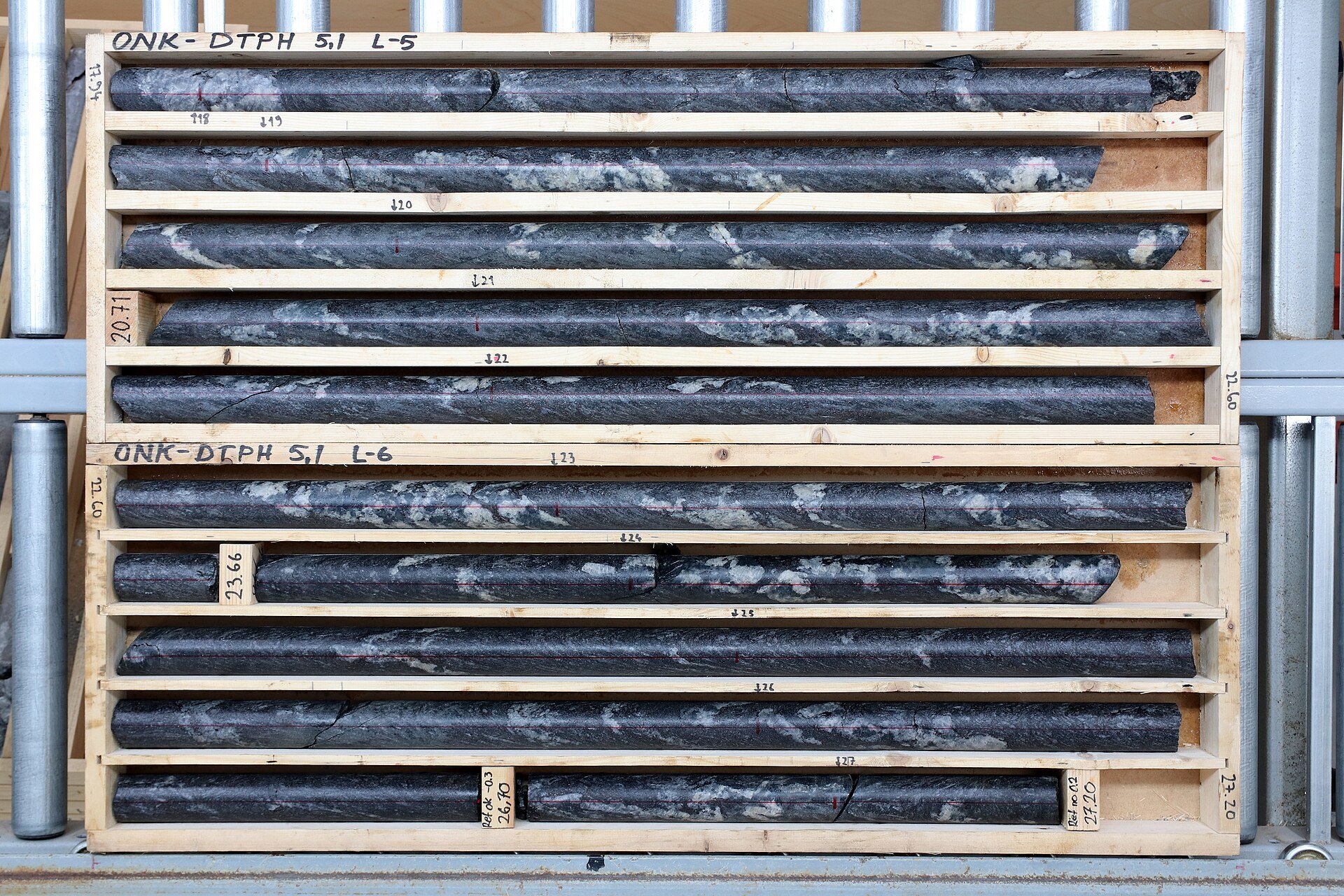
- The program (10 holes, 1,722 m) validates a new intrusive‑related exploration model centered on the 17‑km Winnie pluton and confirms continuity of mineralization to at least 102 m depth (hole KLD25‑37).
- All 1,011 core samples have been submitted for assay; results are pending, but visual logging indicates multiple zones of copper‑zinc‑silver‑gold bearing sulphides across several holes.
Key Details
- Drill Program: 10 holes, total depth = 1,722 m; 1,011 samples (including QA/QC blanks and standards) sent to MSA Labs, Timmins – assays pending.
- Key Intersections:
- KLD25‑34: Massive sulphides 18–20 m (pyrite, chalcopyrite); semi‑massive interval 35–36 m.
- KLD25‑35: Semi‑massive to massive sulphides 14.6–17 m and 18.3–19.6 m; associated brecciation & potassic‑hematite alteration.
- KLD25‑36: Multiple short semi‑massive to massive intervals (21.75–22 m, 24.2–24.7 m, 25.2–26.0 m).
- KLD25‑37: Deep mineralization confirmed 97.5–102 m (chalcopyrite & pyrite disseminations) after a pillowed basalt; earlier zones of alteration and magnetic volcanics.
- Model Validation: Visual logging shows consistent alteration halos, sulphide styles, and intrusive contacts across holes, supporting the hypothesis that the Winnie pluton is the primary heat/fluid source for mineralization.
- Geological Context: The KL district has produced >40 Moz Au; most large deposits are intrusion‑related. Kirkland Lake’s 40,000‑ha land package encompasses the entire 17‑km Winnie pluton contact zone – the largest consolidated parcel in the district.
- Future Work: Planned fall heli‑magnetotelluric (HMT) survey to image intrusive contacts to ~1 km depth; data from pending assays will guide the next phase of deep, strike‑parallel drilling.
- Management Commentary: CEO Stefan Sklepowicz emphasized that the results represent a “significant breakthrough” and shift the interpretation from a shallow VMS model to a district‑scale intrusion‑related system.
Notable Quotes
“The consistency of alteration patterns and sulphide mineralization styles across multiple holes has validated our intrusive‑related model… We have established a substantial exploration target with the geological characteristics consistent with district‑scale mineralizing systems,” – Stefan Sklepowicz, CEO
Qualified Person: Mike Kilbourne, P.Geo., senior geologist (NI 43‑101).
More from Kirkland Lake Discoveries Corp.
Jul 23, 2026 · 07:01