Altamira Gold Intersects High Grade Gold Mineralization in the First Drill Hole at the Guillermo Target and Extends Maria Bonita Mineralization at Depth, Cajueiro District, Brazil
Altamira Validates District-Scale Porphyry Model with High-Grade Intercept at Guillermo and Depth Extensions at Maria Bonita
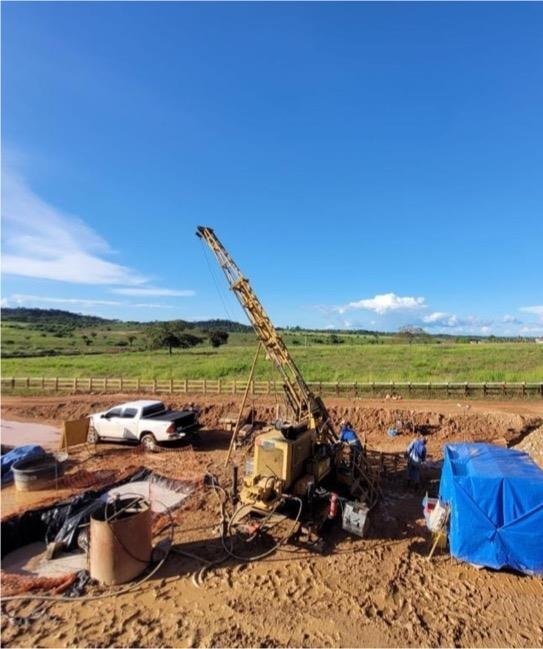
The most recent news (March 18, 2026) reports significant drilling success at the Cajueiro District in Brazil. The first-ever drill hole at the Guillermo target (GLO-01) intersected 7m @ 4.2g/t gold, including a high-grade interval of 0.9m @ 18.1g/t gold. Simultaneously, hole MBA-034 at the Maria Bonita deposit confirmed that mineralization extends at least 100m below the current resource pit shell, returning 75m @ 0.3 g/t gold and 33.5m @ 0.4 g/t gold. The company is currently transitioning to scout drilling other regional targets (Mombaque) while continuing resource expansion at Cajueiro Central.
The impact is Material - Positive for three primary reasons: - New Discovery Validation: The Guillermo result (4.2g/t over 7m) is significantly higher grade than the average grade of the Maria Bonita resource (0.46g/t). This suggests the district may host higher-grade "sweet spots" within the larger porphyry systems. - System Scale: Confirming mineralization 100m below the Maria Bonita pit boundary supports the "vertically extensive" porphyry model, suggesting the current 720,000 oz resource (Indicated + Inferred) has substantial room to grow. - Execution Consistency: Management is successfully following through on the "district-scale" strategy outlined in late 2025, moving from discovery at Tavares Norte and Morro Verde to Guillermo.
Altamira Gold is a junior explorer focused on the Alta Floresta Belt in Mato Grosso, Brazil. Its flagship is the Cajueiro District, which hosts two main deposits: - Cajueiro Central: A higher-grade shear-hosted and porphyry system (700,000 oz Au total). - Maria Bonita: A large-tonnage, lower-grade gold porphyry discovery (720,000 oz Au total). The company controls ~90,000 hectares and is currently testing a 15km east-west corridor of potential porphyry centers.